On the Floor
How safety actually plays out on real sites. Practices that hold up.
-
 The Floor Walker
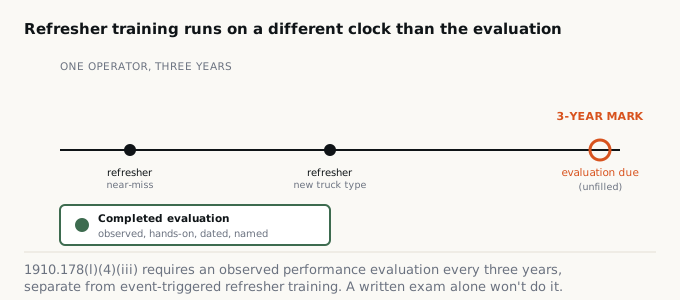
The Three-Year Line Most Forklift Files Never Cross
Refresher training and the triennial performance evaluation are two different obligations under federal OSHA rules, and sites that satisfy one while quietly skipping the other can carry a compliance gap for years without anyone noticing.
-
 The Floor Walker
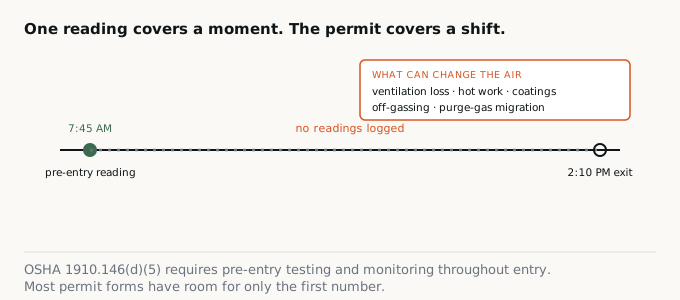
The Permit Says Clean. That Was Six Hours Ago.
OSHA requires atmospheric testing before entry and monitoring throughout it, but most confined-space permits only have room for one number, so most programs only take one reading.
-
 The Floor Walker
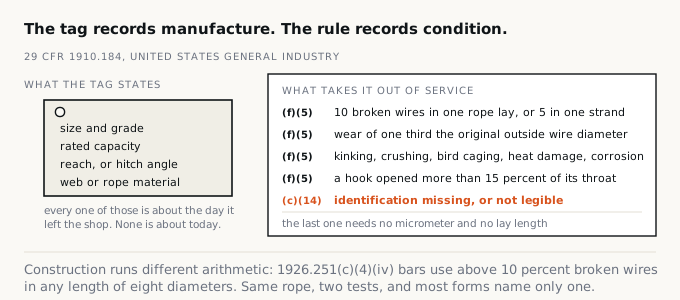
The sling tag tells you how it was born
Take ten slings off the rack and run OSHA's own removal criteria against them, starting with whether the identification is legible. The count that should already be out of service tells you whether the daily inspection is a decision or a formality.
-
 The Floor Walker
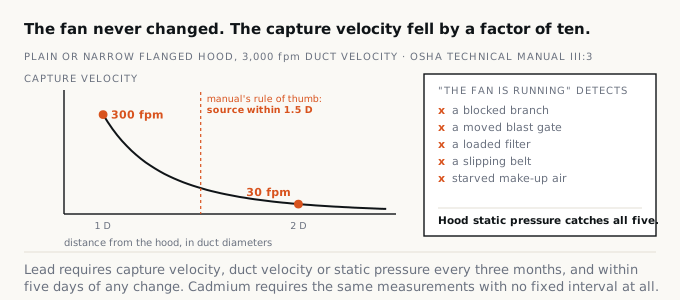
Every exhaust hood has a design velocity. Most plants cannot produce the last measured one.
For each local exhaust hood on site, ask for two numbers: the design capture or face velocity, and the last measured value at the point where the contaminant is generated. If the only record is that the fan was running, the control is unverified.
-
 The Floor Walker
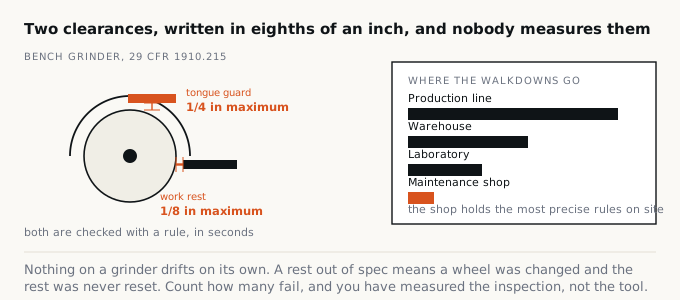
The shop nobody audits
Bench grinder clearances are the only requirement on your site written in eighths of an inch. Measure every grinder in the maintenance shop: the count out of spec is a direct read on how much inspection attention the shop actually gets.
-
 The Floor Walker
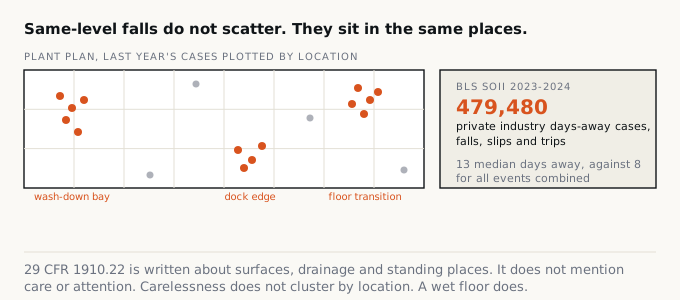
Same-Level Falls Are a Design Output, Not a Lapse
Plot last year's same-level fall cases by location, shift and task instead of by person. If they cluster, the cause is a surface, a drain, a light level or a route, because carelessness does not cluster by location.
-
 The Floor Walker
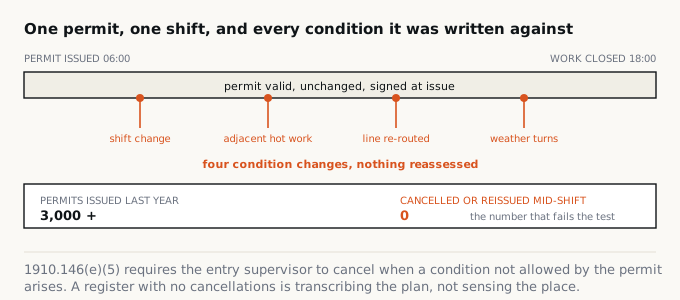
The Permit Register With a Cancellation Rate of Zero
Pull last year's permits and count the ones cancelled or reissued before the work finished. If that number is near zero across thousands of permits, the permit is documenting intent, not conditions.
-
 The Floor Walker
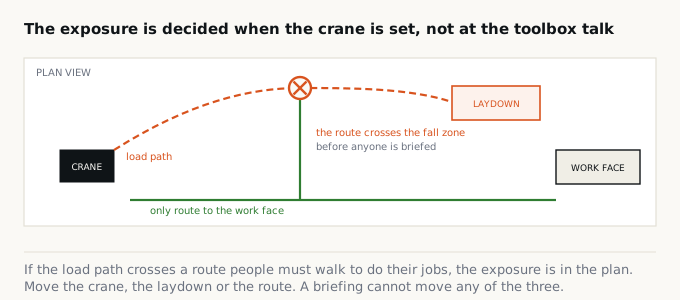
Line of Fire Is Set Before the Crane Is
Walk the load path on the plan before the lift. If it crosses a route people must use to do their jobs, the exposure is designed in, and no toolbox talk will remove it.
-
 The Floor Walker
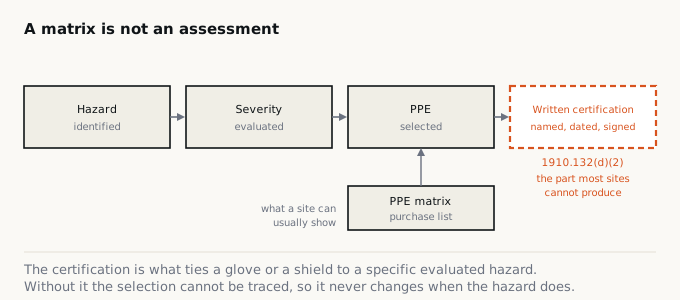
The PPE Matrix Is Not the Hazard Assessment
A site that can produce its PPE matrix but not the dated written certification behind it has documented a purchasing decision, not a hazard analysis.
-
 The Floor Walker
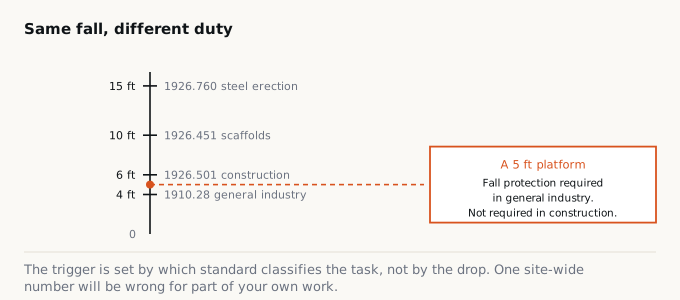
The Trigger Height Is a Classification, Not a Measurement
In United States workplaces the height at which fall protection becomes mandatory is set by which OSHA standard classifies the task, so any program that publishes one site-wide trigger height is wrong for part of its own work.
-
 The Floor Walker
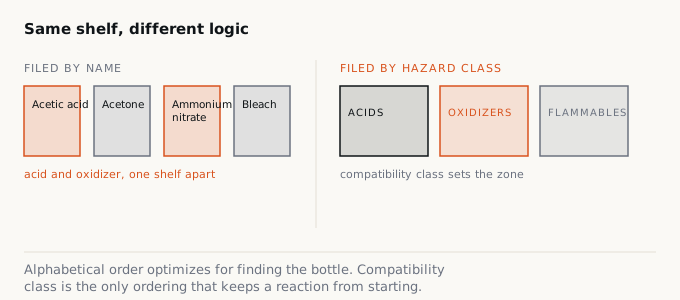
The Chemical Cabinet Filed Like a Library
Storing hazardous chemicals in alphabetical order by product name optimizes for finding the bottle fast, not for what happens when an acid and an oxidizer end up shelved next to each other because their names start with the same letter.
-
 The Floor Walker
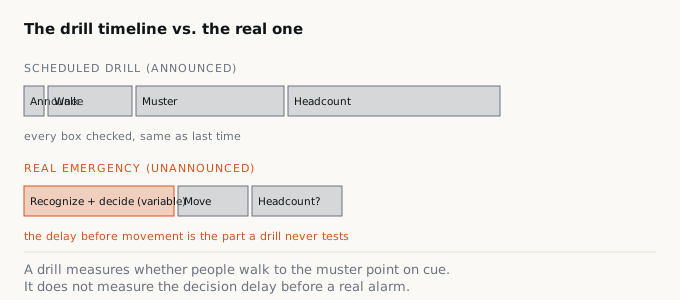
The Drill You Scheduled Is Not the Emergency You're Planning For
A drill everyone knows is coming measures whether people can walk to the muster point on cue, not whether they can recognize a real alarm, pick the nearest usable exit over the habitual one, and get counted accurately under actual confusion.
-
 The Floor Walker
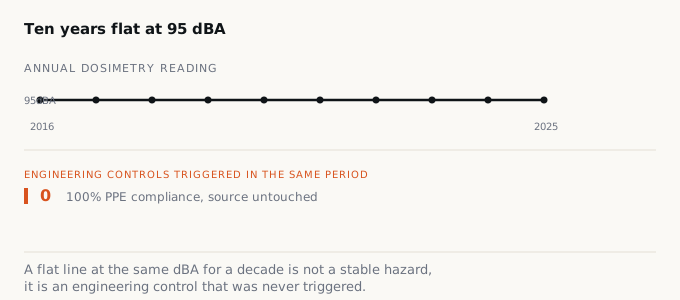
A Decade of 95 dBA: What a Flat Dosimetry Trend Actually Proves
OSHA's hierarchy of controls puts engineering fixes above earplugs for a reason: a hearing conservation program that hits 100 percent PPE compliance and still logs the same 95-plus dBA reading year after year isn't preventing hearing loss, it's documenting exposure at high resolution.
-
 The Floor Walker
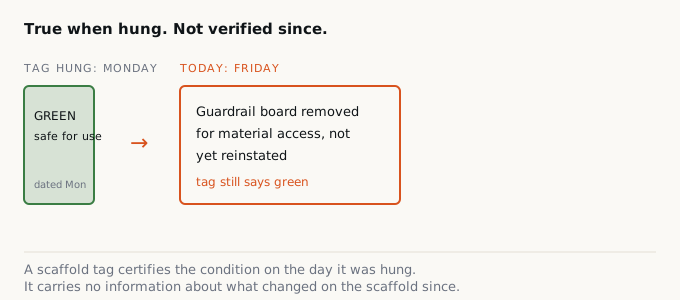
The green tag was true when it was hung
A scaffold tag records one competent person's judgment at handover. OSHA requires an inspection before each work shift, because the hazard is what three trades did to the scaffold since.
-
 The Floor Walker
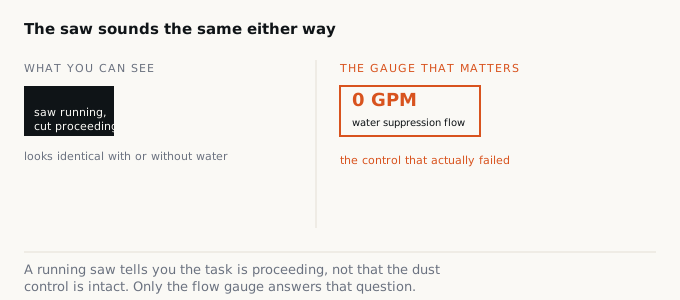
The saw is still cutting, so everyone assumes the dust control is still working
Table 1 protection is conditional on operating and maintaining the control as the manufacturer specifies. An empty water tank or a loaded filter removes the protection without stopping the tool, and nothing on the job tells you it happened.
-
 The Floor Walker
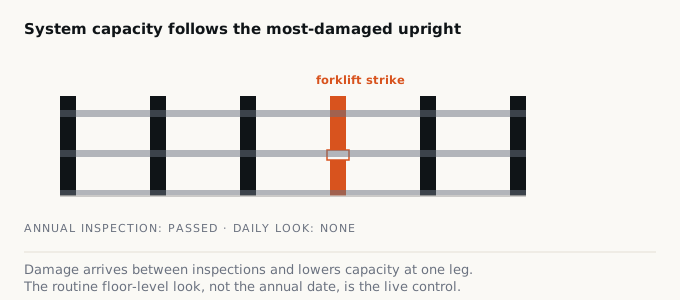
The Rack Is Only As Strong As Its Worst Upright
A racking system's capacity is governed by its most-damaged upright. A facility with a formal annual inspection but no routine floor-level look is running on residual capacity it has never measured.
-
 The Floor Walker
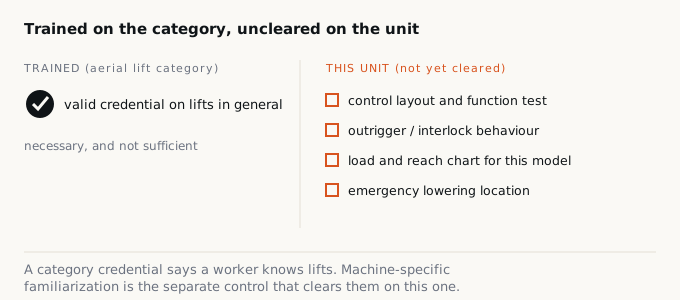
The Card Says Certified. The Machine Says Otherwise.
An operator certified on aerial lifts can still be untrained on the specific unit in front of them. Familiarization on that unit, not the wallet card, is the control that closes the gap.
-
 The Floor Walker
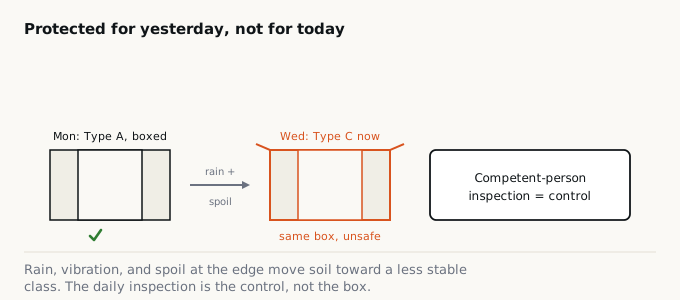
The trench that was safe yesterday
Cave-in protection is not the trench box in your yard; it is today's competent-person inspection matching the protective system to the soil as it actually is right now.
-
 The Floor Walker
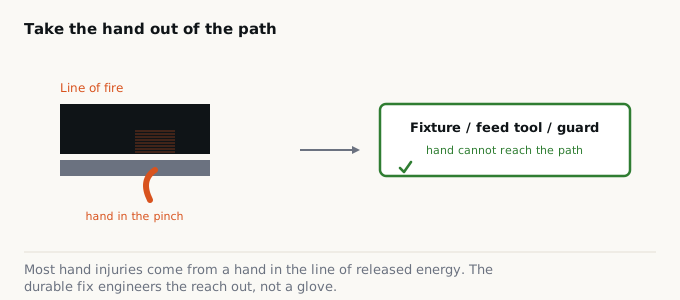
Keep the hand out of the path, not just in a glove
Most serious hand injuries happen because a body part was placed in the line of released energy, so the durable control is redesigning the task so the hand is never in that line, not a cut-resistant glove and a reminder to keep clear.
-
 The Floor Walker
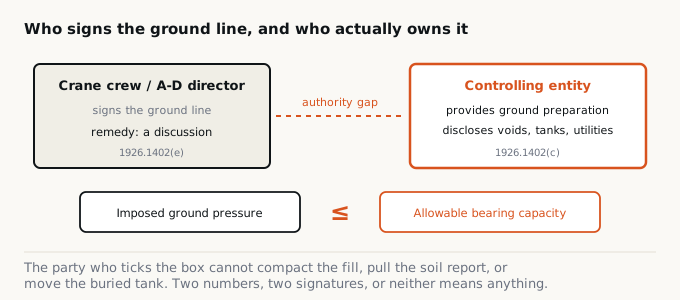
Nobody who signs the lift plan owns the ground
OSHA puts ground conditions on the controlling entity, so a lift checklist that has the crane crew tick off ground bearing capacity is collecting a signature from the one party that cannot fix, and usually cannot see, the thing most likely to drop the crane.
-
 The Floor Walker
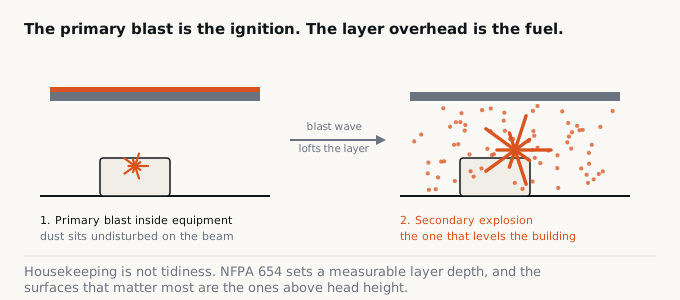
The explosion that kills is the second one
The primary blast is rarely what kills. It lofts the dust that has settled on beams and ledges overhead, and that secondary explosion is the one that levels the building.
-
 The Floor Walker
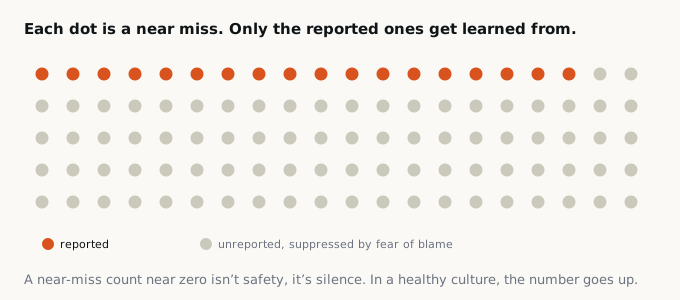
Near-miss reporting dies where blame lives
A plant that reports almost no near misses isn't safe, it's quiet. And a rising near-miss count is usually a sign of health, not danger.
-
 The Floor Walker
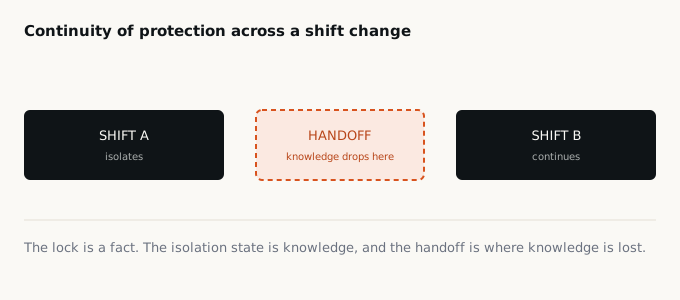
Lockout/tagout that survives a rushed shift change
The written procedure isn't the control. The handoff between shifts is where energy isolation actually fails, and it's the part audits rarely test.
-
 The Floor Walker
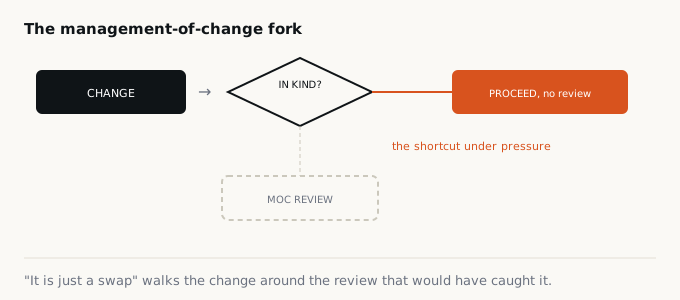
The like-for-like swap is the failure mode
The MOC step skipped under schedule pressure isn't a footnote to the incident, it is the incident.
-
 The Floor Walker
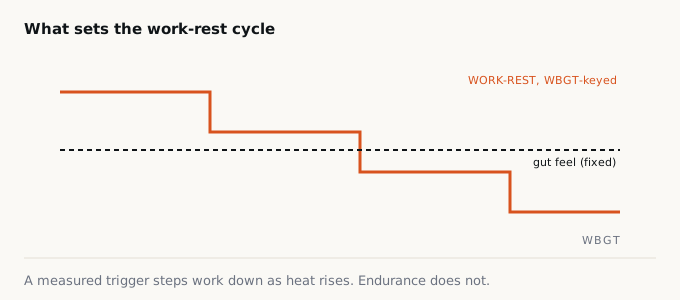
The trigger is the control, not the worker
Work-rest cycles keyed to measured WBGT thresholds outperform a toughness culture.
-
 The Floor Walker
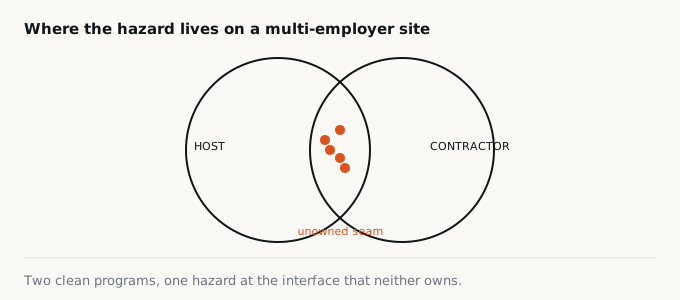
The danger lives in the seam between employers
On mixed sites, incident risk concentrates at the interface between employers, who owns that seam predicts outcomes more than either party's own program.
-
 The Floor Walker
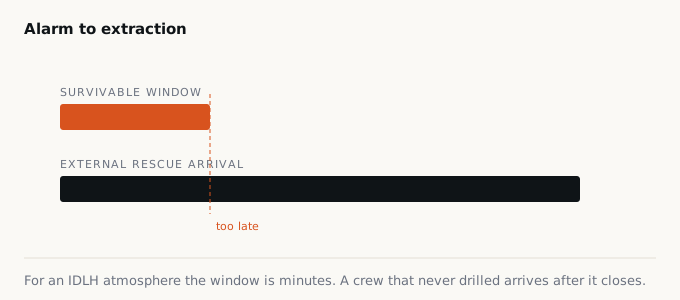
The rescue plan you never drilled
A permit that names a rescue plan means nothing if no one has practiced it, and "call 911" is usually too slow.
-
 The Floor Walker
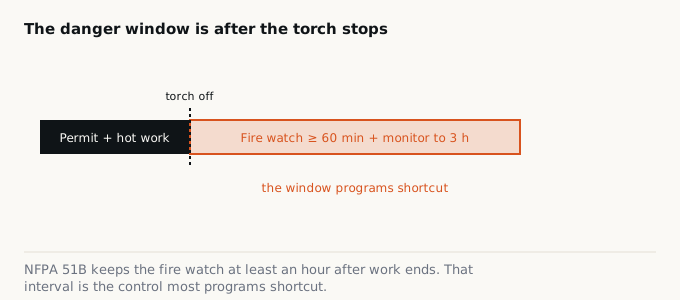
The fire starts after you put the torch down
Many hot-work fires ignite after the cutting stops, during or after the fire watch, so the post-job window is the control that prevents them, and it is the one most programs shortcut.
-
 The Floor Walker
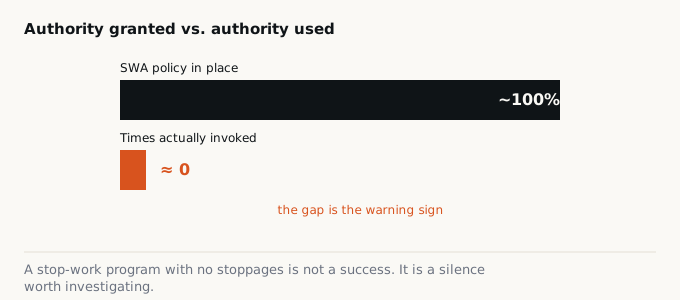
A stop-work program with zero stoppages is the warning
Stop-work authority written into a policy is not a control; the only evidence it is real is that people actually invoke it and pay no lasting cost when they do, so a clean record of zero stoppages is a warning sign, not a trophy.
-
 The Floor Walker
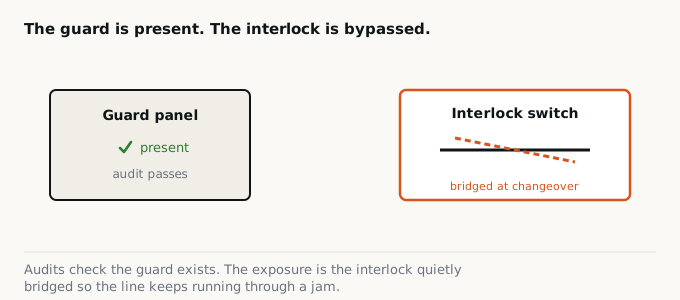
The guard passed the audit. The bypass is still running.
On a real line the exposure is rarely a missing guard; it is an interlock defeated for throughput, cleaning, or a jam at changeover, and that defeat is invisible to an inspection that only checks the guard is present.
-
 The Floor Walker
The fit test is not the program
A passing annual fit test proves a seal on one face on one day; if you cannot name your cartridge change schedule and your medical clearance process, you do not have a respirator program.
-
 The Floor Walker
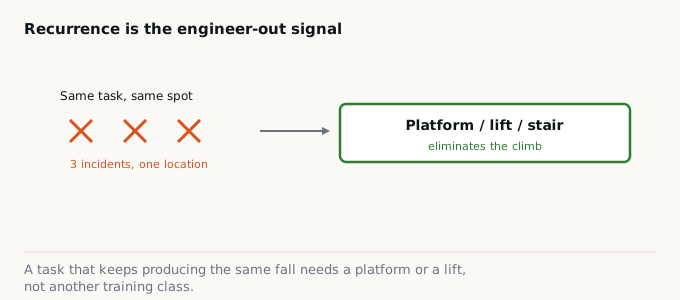
Ladder-last: the fall usually started with the wrong access
Most ladder injuries are not a training problem; they are a task that should never have been done from a ladder, so the durable fix is removing the ladder, not retraining the user.
-
 The Floor Walker
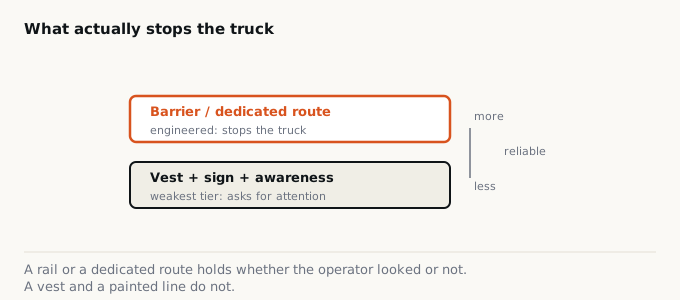
Separate people from trucks by design, not by hope
If pedestrians and powered industrial trucks share the same floor and the only thing keeping them apart is attention, the control has already failed.