Teardowns
Safety-tech, taken apart. What reduces incidents vs. what just generates dashboards.
-
 The Skeptic
The Two Feet Nobody Tapes Off
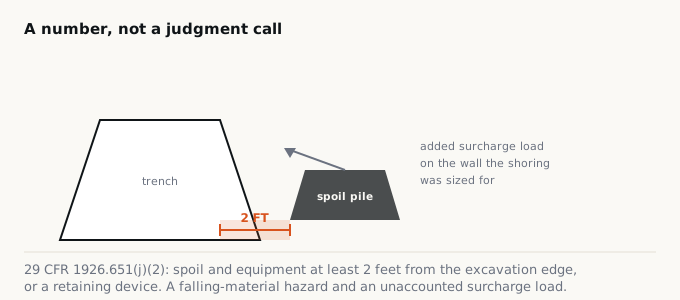
OSHA's spoil pile setback is one of the only bright-line, tape-measure numbers in excavation safety, and on active sites it gets ignored more often than it gets enforced, both as a falling-material hazard and as an unaccounted-for load on the wall the protective system was sized for.
-
 The Skeptic
The 2036 Ladder Deadline Isn't Gone. It's Only Proposed to Die.
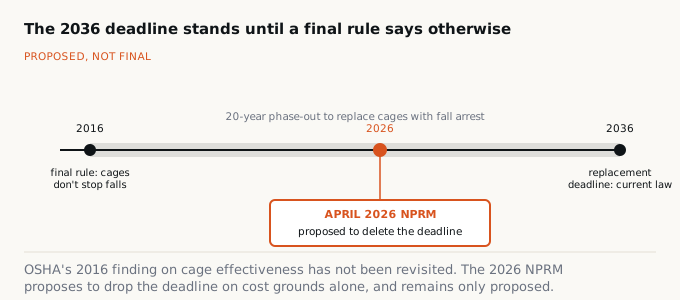
OSHA's own 2016 record found that cages and wells on fixed ladders do not stop a fall. In 2026 the agency proposed to let that acknowledged-inadequate protection stand indefinitely, without revisiting the safety finding, only the cost. As of this writing the 2036 replacement deadline is still current federal law.
-
 The Skeptic
Chained Is Not Compliant: The Cylinder Audit That Checks the Wrong Thing
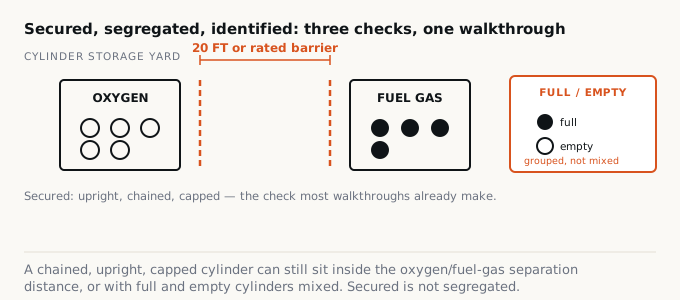
A storage area can pass every cylinder-securement check, chained, upright, capped, while running oxygen and fuel-gas cylinders closer together than federal law allows, because most walkthroughs verify that cylinders are secured, not that they are segregated or identified.
-
 The Skeptic
A year of inspection reports tells you nothing about whether the system was on
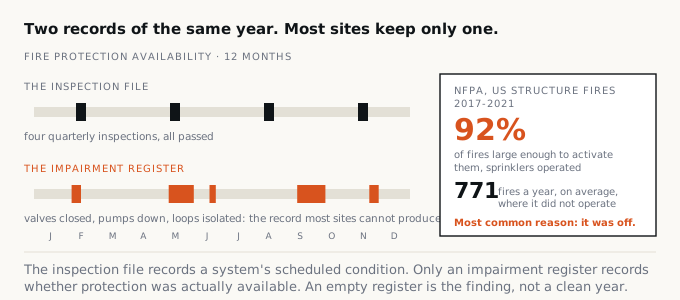
Pull last year's fire protection impairment register and total the hours each system was actually out of service. If it is empty or near-empty while maintenance and project records show closed valves and pumps down, your program is measuring scheduled condition, not availability.
-
 The Skeptic
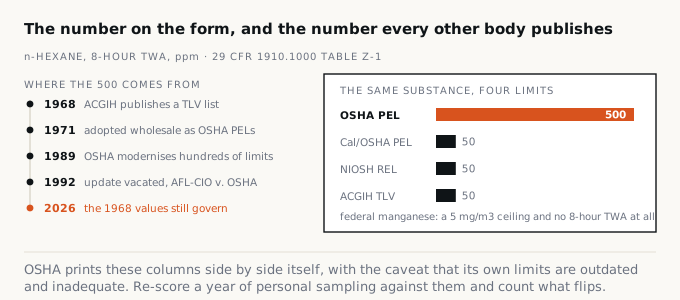
The limit you measure against was set in 1968
Re-score your last 12 months of personal sampling against the NIOSH REL and Cal/OSHA columns of OSHA's own annotated tables. The count of results that flip from pass to fail is the size of the gap between your compliance record and your exposure control.
-
 The Skeptic
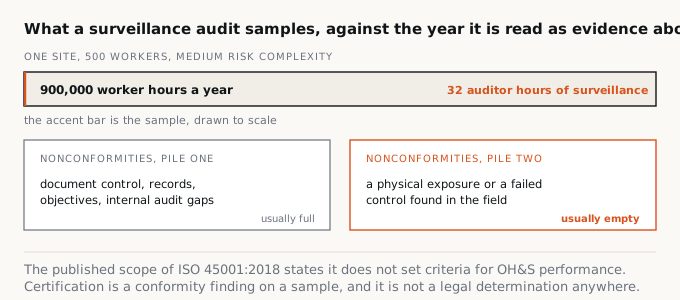
What the ISO 45001 certificate actually certifies
Sort every nonconformity from your last three-year certification cycle into paperwork versus field exposure. If the field pile is empty, the audit is grading your filing.
-
 The Skeptic
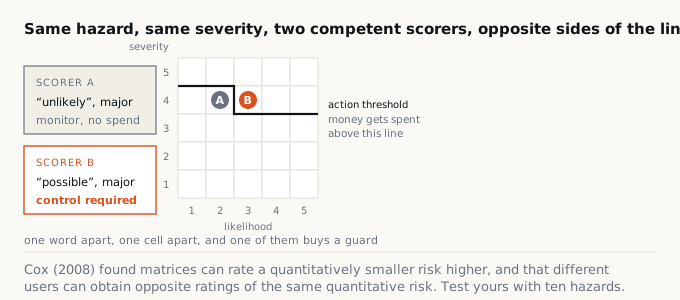
The risk matrix is not a measurement
Strip the scores off ten hazards and have two competent people rescore them alone. If more than a third land on opposite sides of your action threshold, the matrix is not deciding anything.
-
 The Skeptic
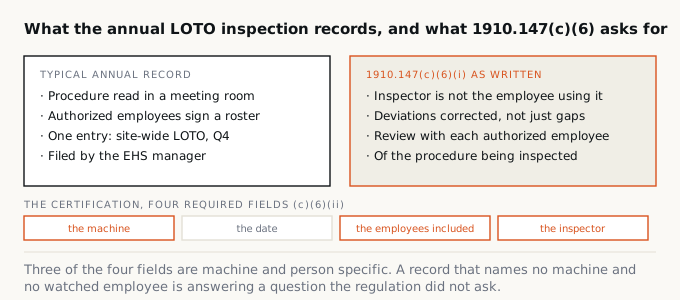
Your LOTO periodic inspection was a document review
Pull last year's lockout/tagout certifications. If you cannot tie each one to a named machine, a named authorized employee, and a date on which someone watched that employee isolate it, you ran a document review, not the periodic inspection 29 CFR 1910.147(c)(6) describes.
-
 The Skeptic
A SIF Precursor List Only Counts If It Was Written First
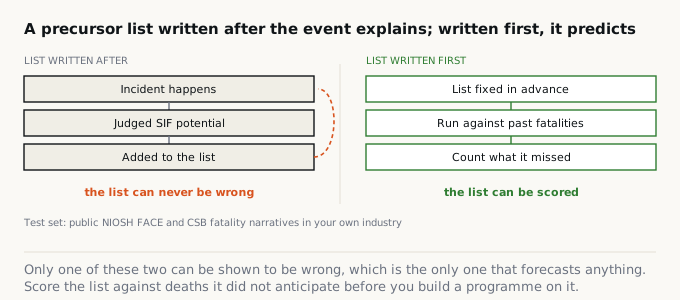
A serious injury and fatality precursor programme predicts nothing unless the list was fixed before the incidents it sorts and can be scored against deaths it failed to anticipate.
-
 The Skeptic
The corrective action closure rate is not a safety metric
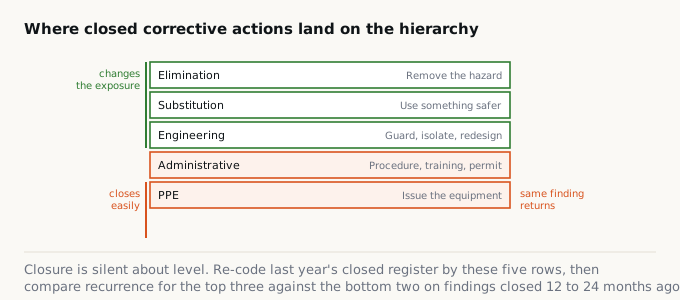
Sort last year's closed corrective actions by level on the hierarchy of controls: if most sit at training, procedure or signage, the CAPA system is producing paper, and the recurrence data will show it.
-
 The Skeptic
The Log Is Now a Public Download
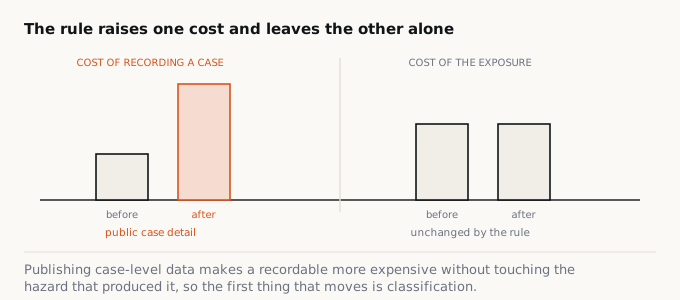
Publishing case-level injury data raises the cost of recording a case and leaves the cost of the exposure untouched, so the first thing that moves at most sites will be classification, not hazard control.
-
 The Skeptic
One Chain, One Cause, and the Operator at the End of It
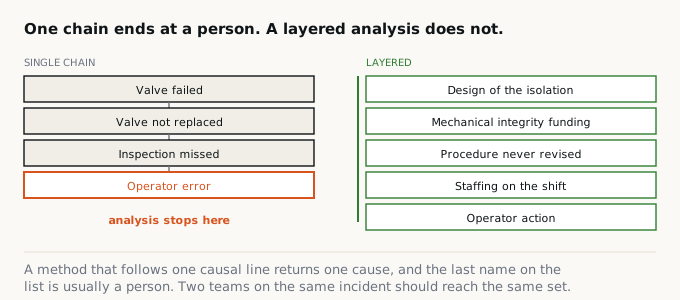
A single-chain investigation stops at the first plausible cause it reaches, and you can test whether yours does by giving the same incident to two independent teams and comparing what they name.
-
 The Skeptic
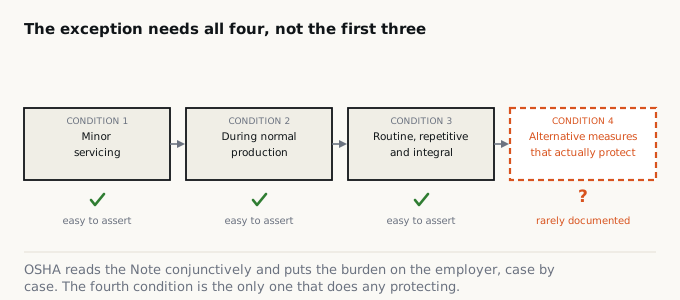
The minor servicing exception has four tests, and most sites only run three
United States general industry lockout/tagout lets you skip lockout for minor servicing only if all four conditions hold together, and the fourth, alternative measures that provide effective protection, is the one OSHA says the employer must prove case by case.
-
 The Skeptic
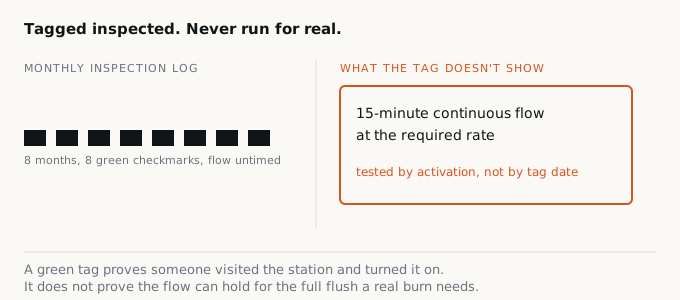
The eyewash on the wall is not a control until someone has run it
An installed, inspected, unactivated plumbed eyewash fails on water quality, temperature, and flow, and every one of those failures is invisible from the outside. The weekly activation is the control, not the fixture.
-
 The Skeptic
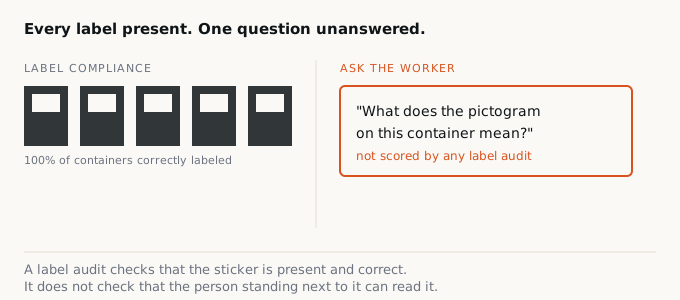
A fully labeled workplace where nobody can tell you what the chemical does
HazCom compliance is measured by label presence, SDS access, and training completion. None of those measure whether a worker can state the hazard, and the standard's own word for the training it requires is effective.
-
 The Skeptic
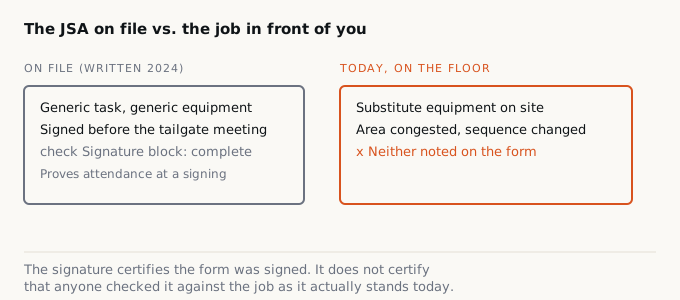
The JSA That Was Already Written
A job safety analysis pulled from a binder and signed before the tailgate meeting protects the paperwork, not the crew, when the equipment, the area, or the sequence in front of them today doesn't match the one the form describes.
-
 The Skeptic
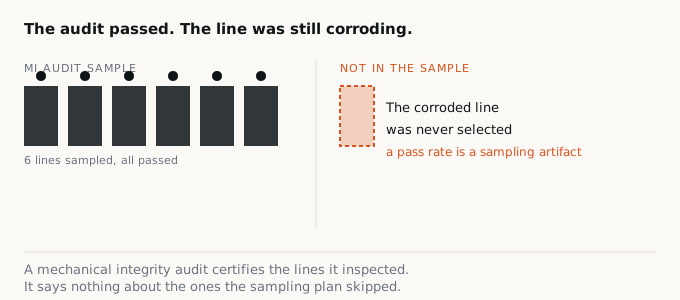
Your mechanical integrity program can pass an audit and still miss the corroded line
A fully compliant MI program fails where the paperwork does not look: in which equipment made the inspection list, and on what basis the interval was set. Completion rate is not coverage.
-
 The Skeptic
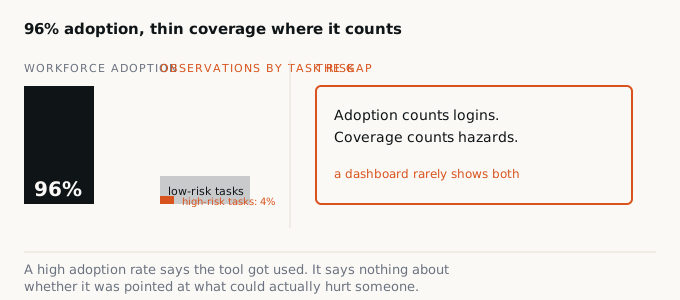
95% Adoption Doesn't Mean 95% of the Hazards
A safety observation platform can hit near-universal login and submission rates while the highest-risk tasks in the building go unobserved, because usage and hazard-capture are different metrics and only one of them makes a tidy slide.
-
 The Skeptic
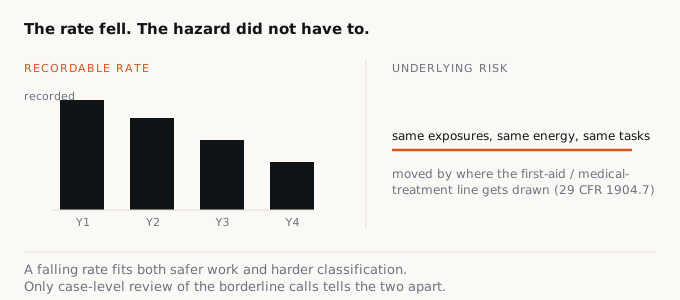
A Falling Recordable Rate Does Not Tell You Which Way It Fell
A dropping recordable rate is equally consistent with safer work and with more aggressive classification. Only case-level review of the decisions, not the total, can tell the two apart.
-
 The Skeptic
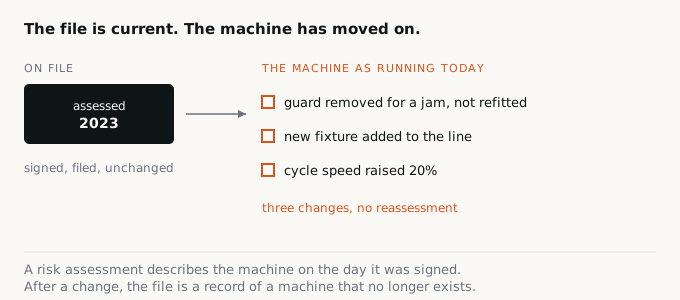
A Risk Assessment Is Only As Current As Its Last Reconciliation
The value of a machine risk assessment is set by when it was last reconciled against the equipment as it actually runs today, not by the fact that a document exists in the file.
-
 The Skeptic
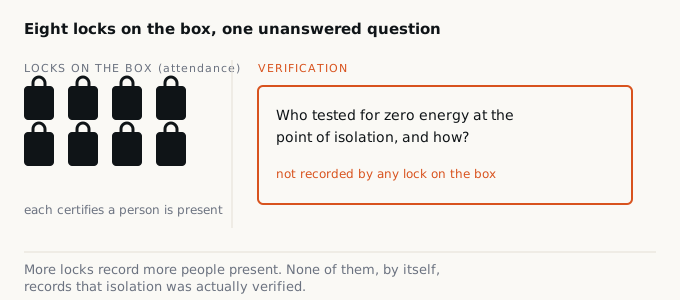
The Group Lockbox Counts Locks, Not Verifications
Adding locks to a group lockbox increases the number of locks, not the certainty that zero energy was ever confirmed. The box records attendance; someone still has to verify isolation.
-
 The Skeptic
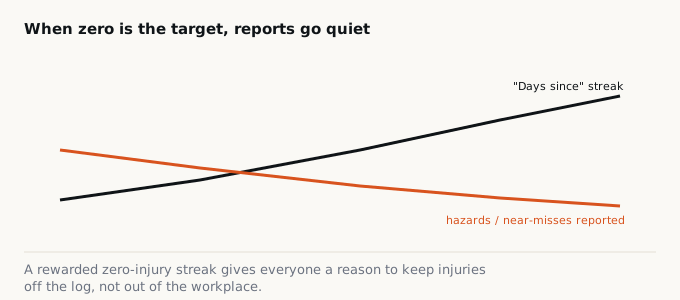
Zero is a vision, not a scoreboard
Attach recognition and pressure to a zero-injury number and you give everyone a reason to keep injuries off the log rather than out of the workplace, so the reported figure can fall while the real risk holds or climbs.
-
 The Skeptic
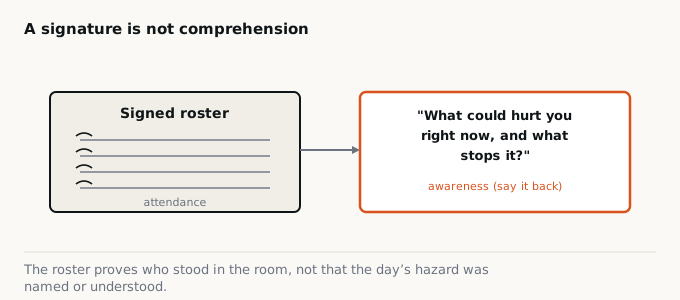
The signed roster proves attendance, not awareness
A toolbox-talk signature sheet documents who stood in the room, not whether anyone understood the hazard or that the day's actual risks were named.
-
 The Skeptic
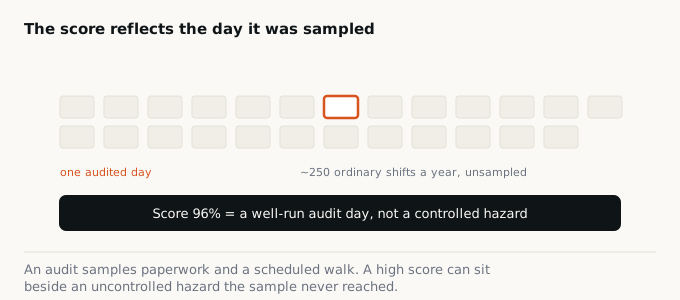
Your audit score measures the audit day, not the risk
A high third-party audit score certifies documentation and a well-run visit, not that a serious hazard is controlled on an ordinary unannounced day.
-
 The Skeptic
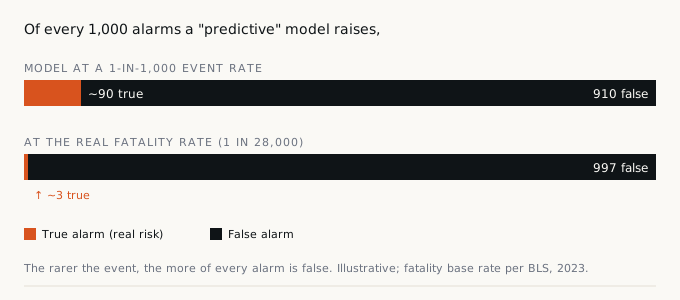
Predictive safety and the base-rate trap
The rarer the incident, the more a 'predictive' model gets wrong every time it fires, and it's trained on the injuries you already have, not the ones that kill.
-
 The Skeptic
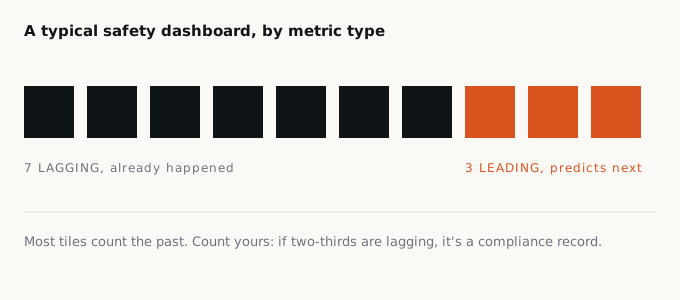
The safety dashboard that only tells you the past
Count the metrics on any safety dashboard. If most describe what already happened, you bought a compliance record, not an early-warning system.
-
 The Skeptic
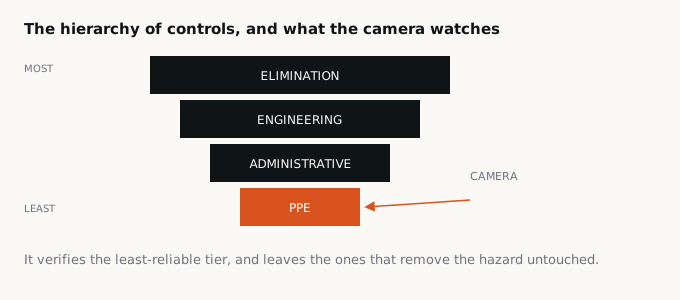
"AI-powered" PPE detection, read literally
Camera systems verify one thing, that a piece of equipment is visible in frame. That's the bottom of the hierarchy of controls, dressed up as safety intelligence.
-
 The Skeptic
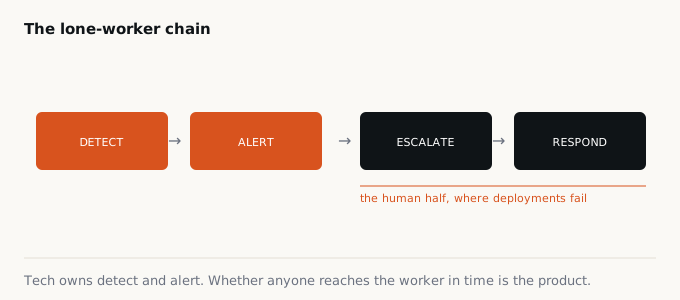
A lone-worker app is only as good as who answers
The check-in isn't the safeguard, the escalation behind it is. The real metric is measured time-to-rescue.
-
 The Skeptic
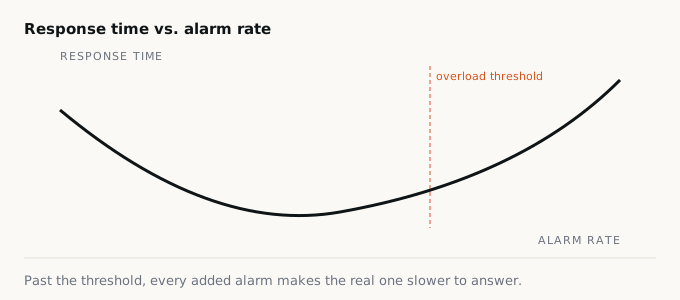
More alarms, slower response
Past a threshold, adding alerts raises response latency instead of lowering it.
-
 The Skeptic
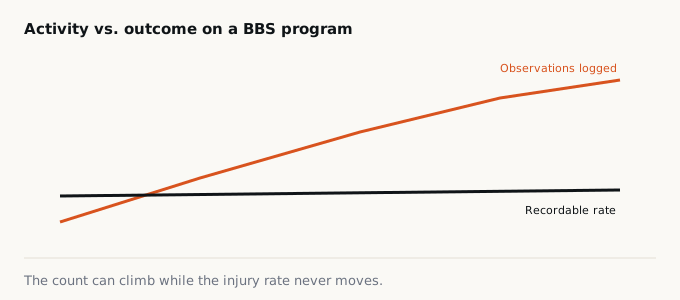
Counting observations isn't reducing incidents
If your BBS KPI is observation volume, you will get observations, not fewer injuries.
-
 The Skeptic
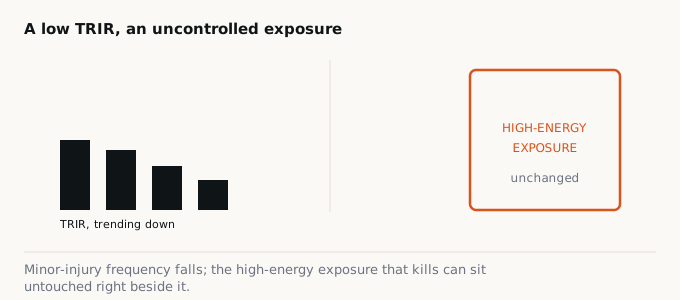
A low TRIR isn't a safe site. It's a small number.
Because the recordable rate is a low-count figure shaped by case management and the first-aid line, a falling TRIR can sit right alongside rising fatality exposure, so benchmarking budget to an industry average can steer money away from what kills people.
-
 The Skeptic
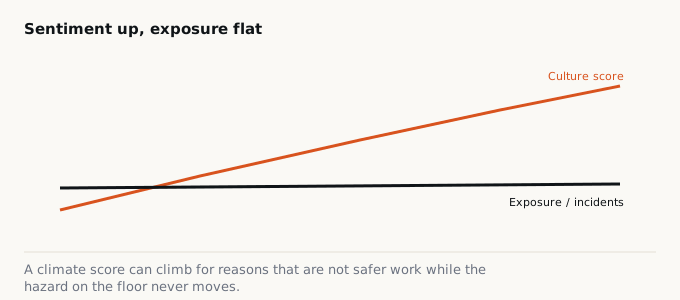
Your culture score went up. That tells you almost nothing.
A rising safety-climate score measures who answered and how they felt, not whether exposure or incidents fell, so treat it as one input and never as an outcome.
-
 The Skeptic
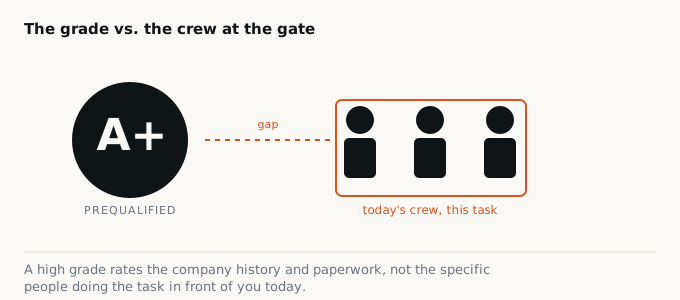
A prequal grade vets the paperwork, not today's crew
A contractor's prequal score rates its history and programs; it cannot tell you whether today's specific crew is trained, competent, and working safely on your site.
-
 The Skeptic
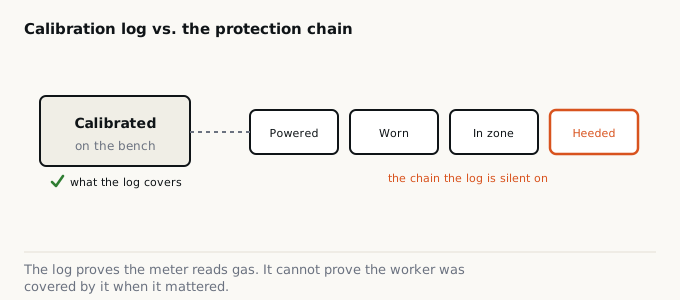
Your calibration log proves the meter works, not the worker
A bump-test or calibration record verifies device integrity; it says nothing about whether the monitor was worn, powered, in the breathing zone, and heeded.
-
 The Skeptic
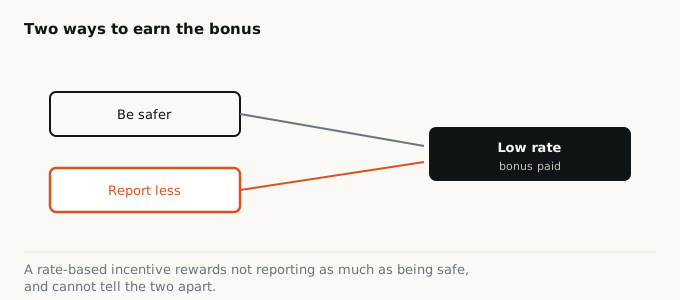
Rate-based safety bonuses buy silence, not safety
If your incentive pays out for a low recordable rate, you are rewarding non-reporting alongside actual safety, and OSHA has formally warned that such programs can unlawfully discourage reporting.
-
 The Skeptic
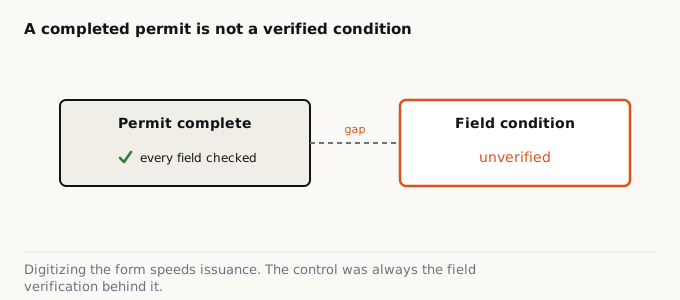
Your e-permit system digitized the form, not the control
If your e-permit rollout raised issuance speed and completion rates without adding field verification steps, you improved paperwork, not safety.
-
 The Skeptic
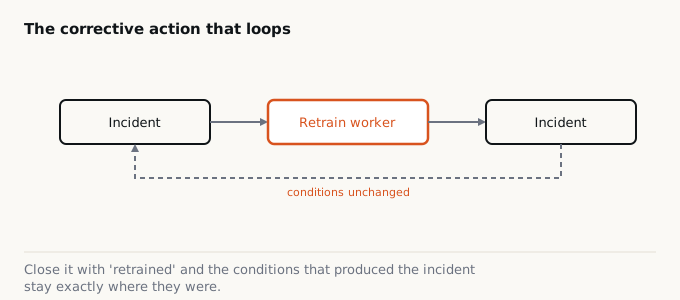
'Retrained the employee' is the corrective action that corrects nothing
Closing an incident with counseling and retraining treats a system failure as a personal one, and it leaves every condition that produced the incident exactly where it was.
-
 The Skeptic
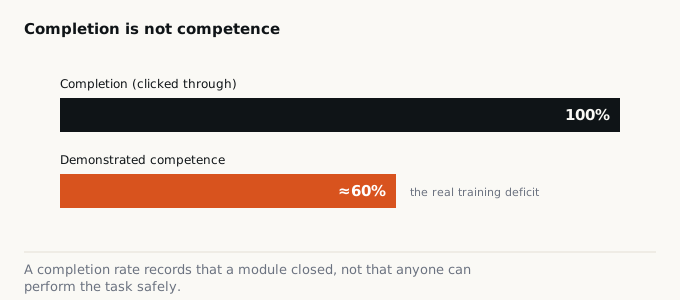
Your '100% trained' dashboard measures clicks, not competence
A completion rate proves people advanced through modules; it does not prove anyone can perform the task safely, and OSHA has said so for decades.