A lone-worker app is only as good as who answers
The check-in isn't the safeguard, the escalation behind it is. The real metric is measured time-to-rescue.
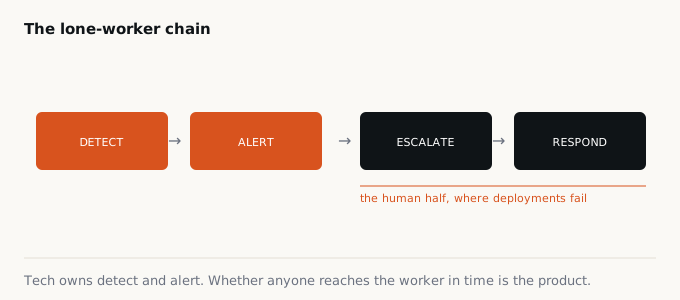
The category sells peace of mind: a wearable or app that lets someone working alone check in, and raises a “man-down” alert if they don’t. The alert is the easy part. Whether anyone is on the other end who can reach the worker in time is the whole product, and it’s the part the demo skips.
The alert is not the rescue
A lone-worker system is a chain: detect, alert, escalate, respond. The technology owns the first two links. The last two are human and organisational, and they’re where these deployments quietly fail, an alarm routed to a phone on silent, to a monitoring centre whose “response” is a callback, or to a contact list of people who left the company. The control that matters is time-to-reach: how long from the alert until a trained person is physically at the worker. The UK HSE’s lone-working guidance (INDG73) is blunt that employers must arrange to monitor lone workers and respond to emergencies, the device only triggers a response capability the organisation still has to own. (US has no lone-worker-specific standard; the duty runs through the General Duty Clause and hazard-specific rules.)
Feature lists don’t rescue anyone
Vendors compete on sensitivity, fall detection, no-motion timers, tamper alerts. All of it is upstream of the only question that decides whether the worker lives: when the alert fires for real, who moves, and how fast do they arrive?
Field check
Run an unannounced drill. Trigger a real man-down alert on a genuine lone-worker shift, then measure the minutes from alarm to a trained responder physically reaching the worker, not to the callback, to the arrival. If you've never timed it, you don't have a lone-worker safety system; you have a notification app.
The honest measure of a lone-worker programme isn’t the spec sheet, it’s a stopwatch on the response. Test the arrival, not the alert.