 The Skeptic
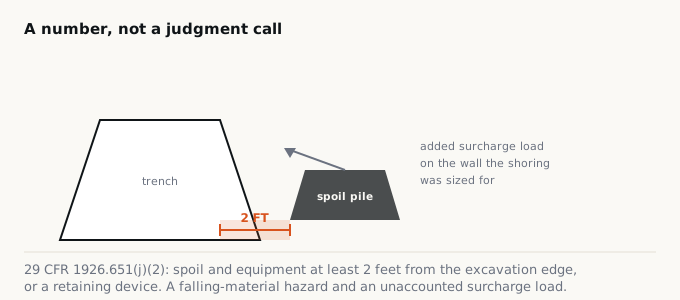
 OSHA's spoil pile setback is one of the only bright-line, tape-measure numbers in excavation safety, and on active sites it gets ignored more often than it gets enforced, both as a falling-material hazard and as an unaccounted-for load on the wall the protective system was sized for.
Oct 2, 2026 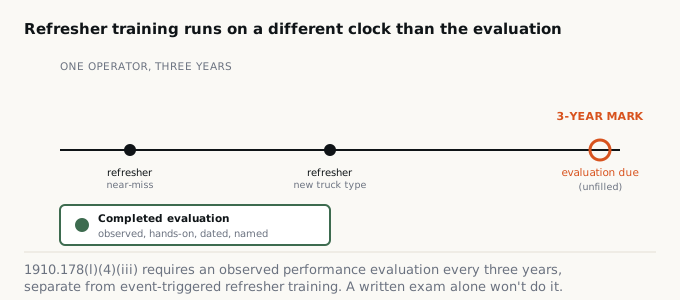 The Floor Walker
 Refresher training and the triennial performance evaluation are two different obligations under federal OSHA rules, and sites that satisfy one while quietly skipping the other can carry a compliance gap for years without anyone noticing.
Oct 1, 2026 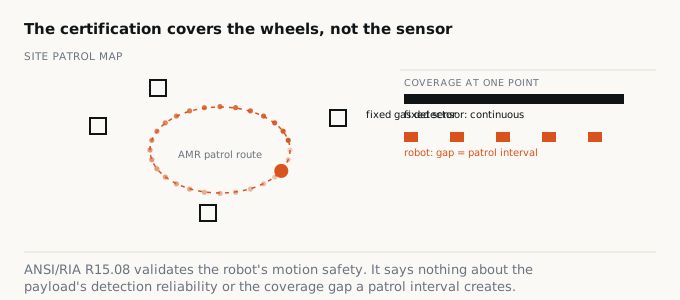 The Scout
 Autonomous mobile robots are increasingly built to carry gas sensors and thermal cameras on patrol routes, but the standard that certifies the robot's movement says nothing about the payload's detection reliability, and almost no site is yet asking what the patrol interval actually costs in coverage.
Sep 30, 2026 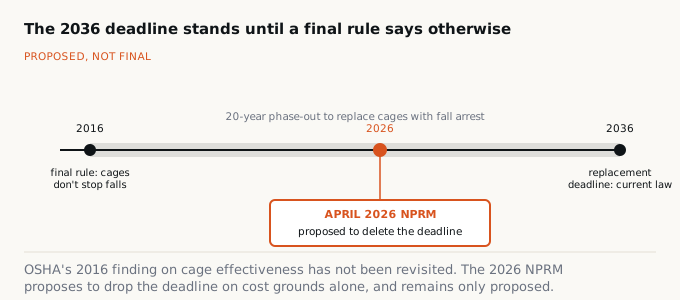 The Skeptic
 OSHA's own 2016 record found that cages and wells on fixed ladders do not stop a fall. In 2026 the agency proposed to let that acknowledged-inadequate protection stand indefinitely, without revisiting the safety finding, only the cost. As of this writing the 2036 replacement deadline is still current federal law.
Sep 29, 2026 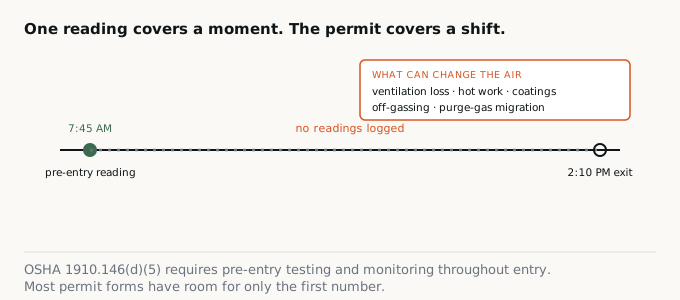 The Floor Walker
 OSHA requires atmospheric testing before entry and monitoring throughout it, but most confined-space permits only have room for one number, so most programs only take one reading.
Sep 28, 2026 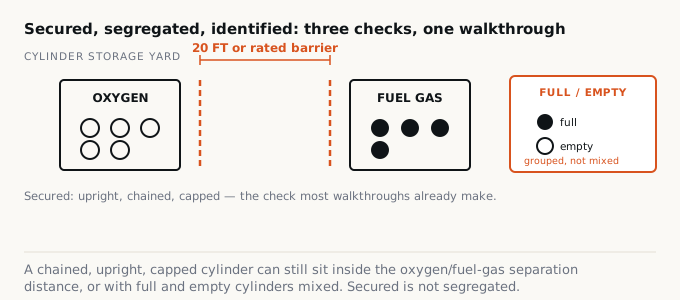 The Skeptic
 A storage area can pass every cylinder-securement check, chained, upright, capped, while running oxygen and fuel-gas cylinders closer together than federal law allows, because most walkthroughs verify that cylinders are secured, not that they are segregated or identified.
Sep 27, 2026 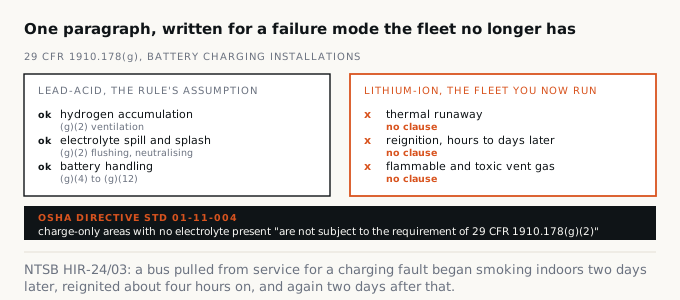 The Scout
 If your battery charging procedure was written for lead-acid and the batteries in the room are now lithium-ion, the site is compliant with a United States OSHA rule aimed at hydrogen and spilled electrolyte while the credible event is thermal runaway, and nothing in the compliance record will flag the mismatch.
Sep 26, 2026 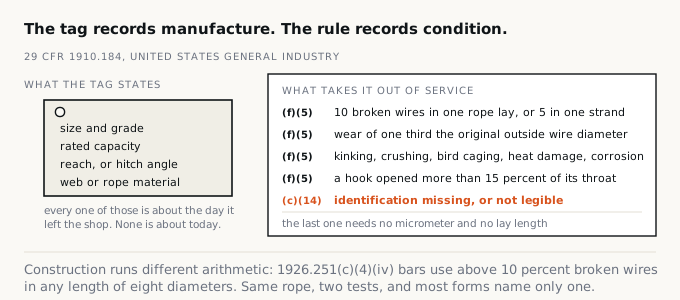 The Floor Walker
 Take ten slings off the rack and run OSHA's own removal criteria against them, starting with whether the identification is legible. The count that should already be out of service tells you whether the daily inspection is a decision or a formality.
Sep 24, 2026 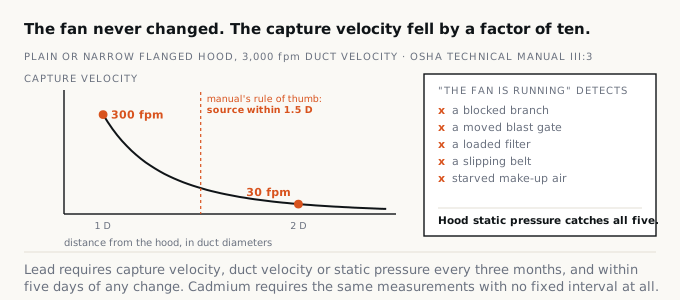 The Floor Walker
 For each local exhaust hood on site, ask for two numbers: the design capture or face velocity, and the last measured value at the point where the contaminant is generated. If the only record is that the fan was running, the control is unverified.
Sep 23, 2026 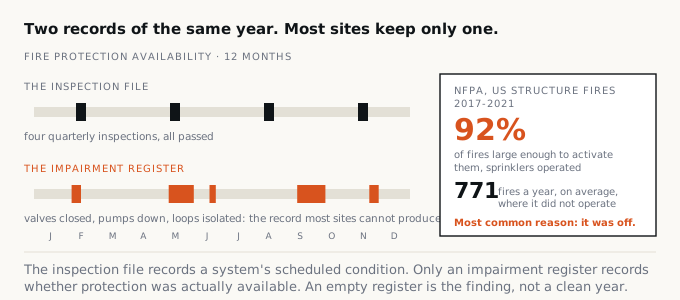 The Skeptic
 Pull last year's fire protection impairment register and total the hours each system was actually out of service. If it is empty or near-empty while maintenance and project records show closed valves and pumps down, your program is measuring scheduled condition, not availability.
Sep 21, 2026 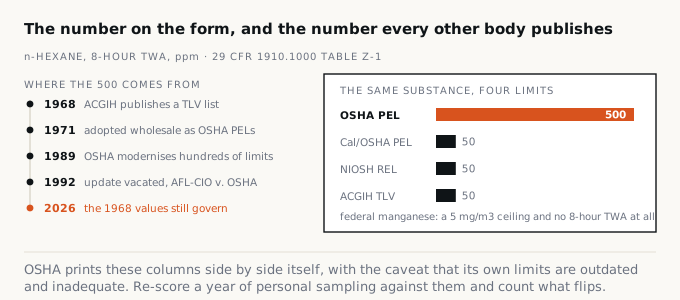 The Skeptic
 Re-score your last 12 months of personal sampling against the NIOSH REL and Cal/OSHA columns of OSHA's own annotated tables. The count of results that flip from pass to fail is the size of the gap between your compliance record and your exposure control.
Sep 20, 2026 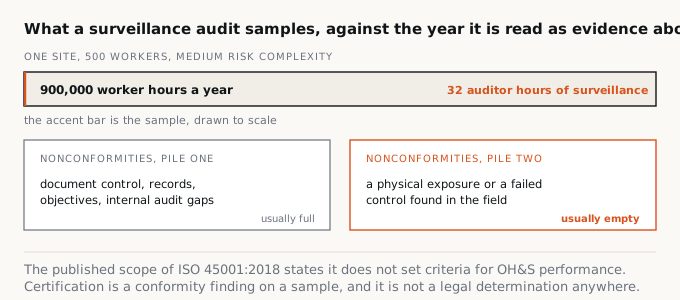 The Skeptic
 Sort every nonconformity from your last three-year certification cycle into paperwork versus field exposure. If the field pile is empty, the audit is grading your filing.
Sep 19, 2026 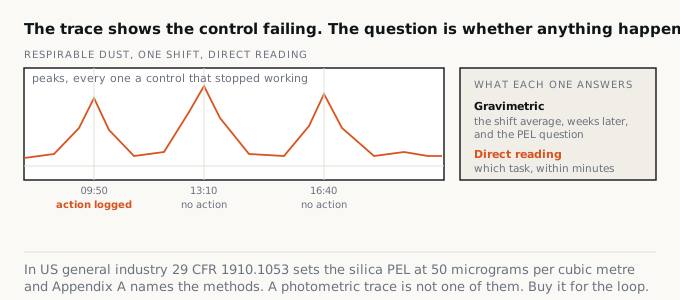 The Scout
 Pull a month of real-time dust traces and match every peak to an action taken. If the peaks generated charts and no work changed, you bought a recorder.
Sep 18, 2026 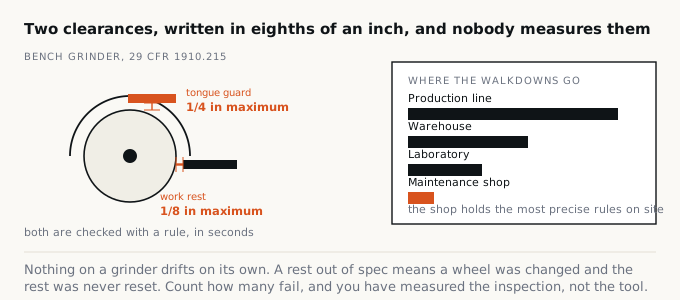 The Floor Walker
 Bench grinder clearances are the only requirement on your site written in eighths of an inch. Measure every grinder in the maintenance shop: the count out of spec is a direct read on how much inspection attention the shop actually gets.
Sep 17, 2026 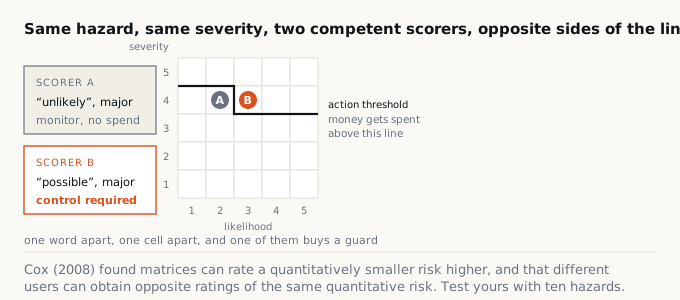 The Skeptic
 Strip the scores off ten hazards and have two competent people rescore them alone. If more than a third land on opposite sides of your action threshold, the matrix is not deciding anything.
Sep 16, 2026 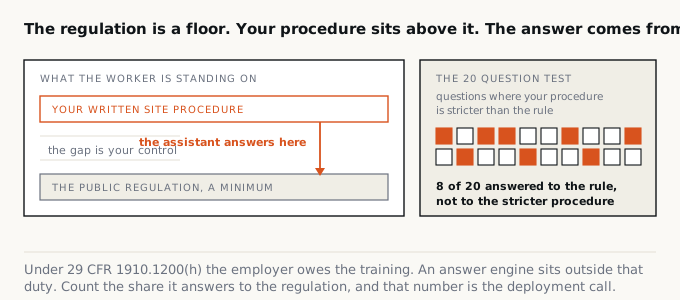 The Scout
 Put 20 questions to your site assistant where your own written procedure is stricter than the rule. The share it answers to the regulation is your deployment decision.
Sep 15, 2026 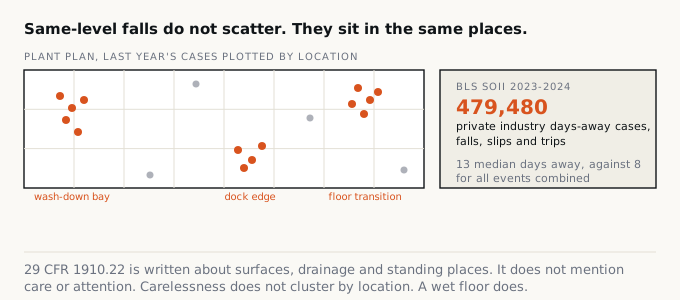 The Floor Walker
 Plot last year's same-level fall cases by location, shift and task instead of by person. If they cluster, the cause is a surface, a drain, a light level or a route, because carelessness does not cluster by location.
Sep 14, 2026 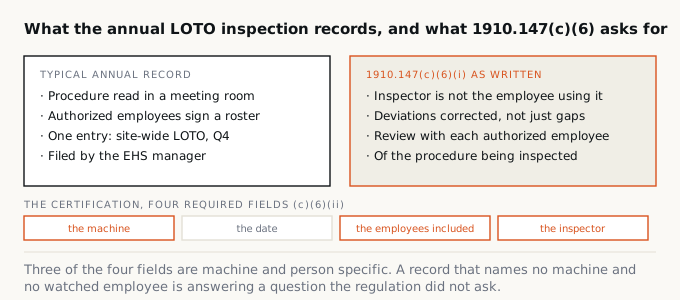 The Skeptic
 Pull last year's lockout/tagout certifications. If you cannot tie each one to a named machine, a named authorized employee, and a date on which someone watched that employee isolate it, you ran a document review, not the periodic inspection 29 CFR 1910.147(c)(6) describes.
Sep 13, 2026 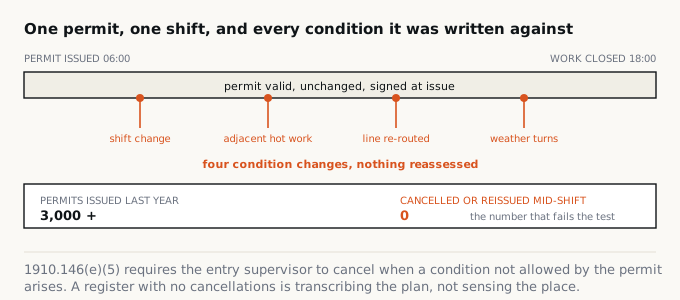 The Floor Walker
 Pull last year's permits and count the ones cancelled or reissued before the work finished. If that number is near zero across thousands of permits, the permit is documenting intent, not conditions.
Sep 11, 2026 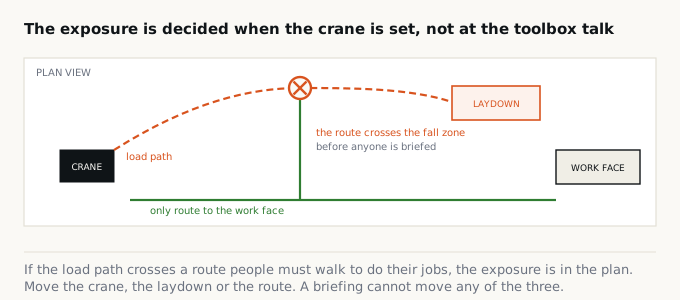 The Floor Walker
 Walk the load path on the plan before the lift. If it crosses a route people must use to do their jobs, the exposure is designed in, and no toolbox talk will remove it.
Sep 10, 2026 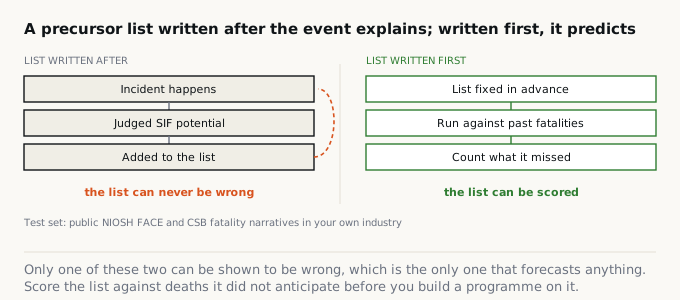 The Skeptic
 A serious injury and fatality precursor programme predicts nothing unless the list was fixed before the incidents it sorts and can be scored against deaths it failed to anticipate.
Sep 9, 2026 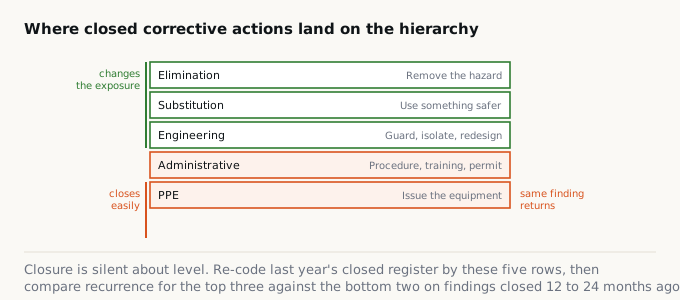 The Skeptic
 Sort last year's closed corrective actions by level on the hierarchy of controls: if most sit at training, procedure or signage, the CAPA system is producing paper, and the recurrence data will show it.
Sep 8, 2026 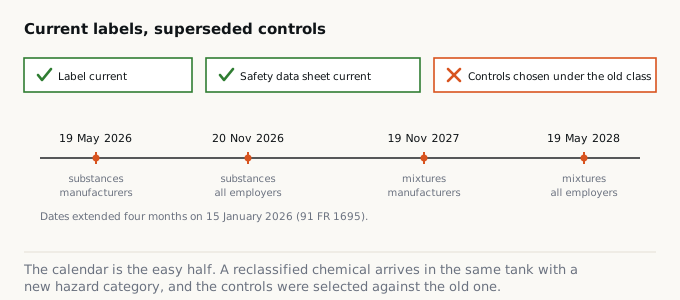 The Scout
 A site can hold a current label and a current safety data sheet for every chemical it uses and still be running exposure controls that were selected against a hazard classification the 2024 rule has since replaced.
Sep 5, 2026 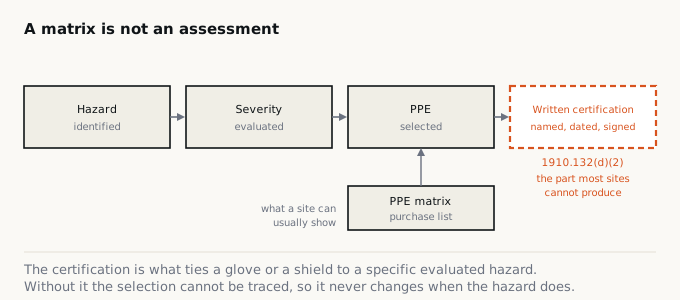 The Floor Walker
 A site that can produce its PPE matrix but not the dated written certification behind it has documented a purchasing decision, not a hazard analysis.
Sep 4, 2026 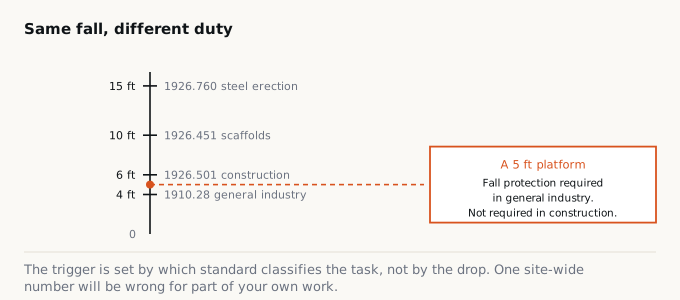 The Floor Walker
 In United States workplaces the height at which fall protection becomes mandatory is set by which OSHA standard classifies the task, so any program that publishes one site-wide trigger height is wrong for part of its own work.
Sep 3, 2026 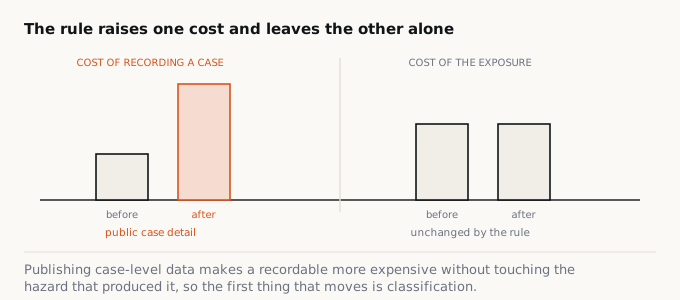 The Skeptic
 Publishing case-level injury data raises the cost of recording a case and leaves the cost of the exposure untouched, so the first thing that moves at most sites will be classification, not hazard control.
Sep 2, 2026 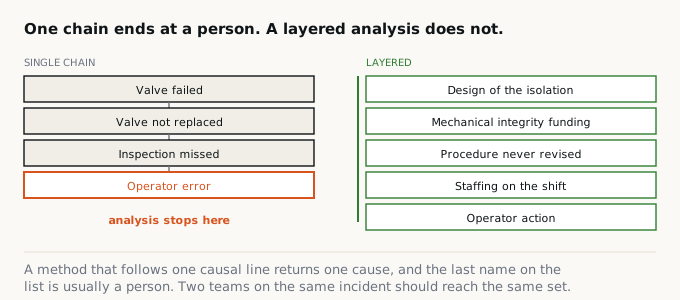 The Skeptic
 A single-chain investigation stops at the first plausible cause it reaches, and you can test whether yours does by giving the same incident to two independent teams and comparing what they name.
Sep 1, 2026 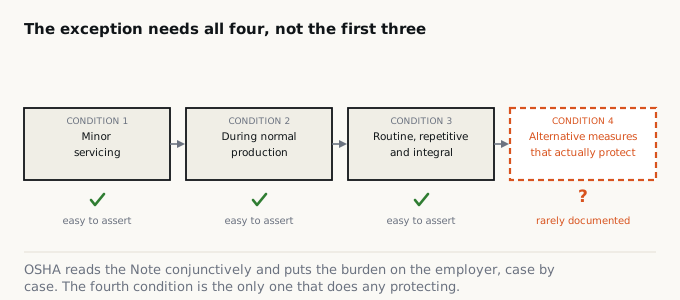 The Skeptic
 United States general industry lockout/tagout lets you skip lockout for minor servicing only if all four conditions hold together, and the fourth, alternative measures that provide effective protection, is the one OSHA says the employer must prove case by case.
Aug 31, 2026 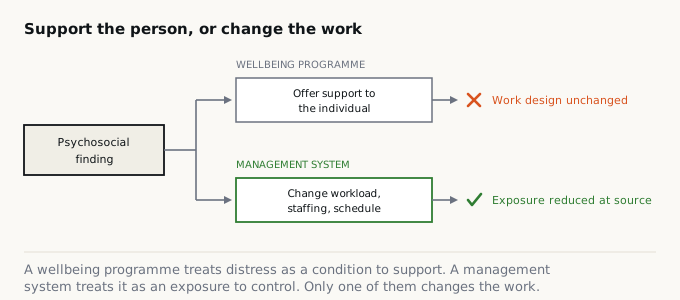 The Scout
 If no psychosocial finding at your site has ever changed how work is designed, staffed or scheduled, you are running a wellbeing programme and not a hazard control.
Aug 30, 2026 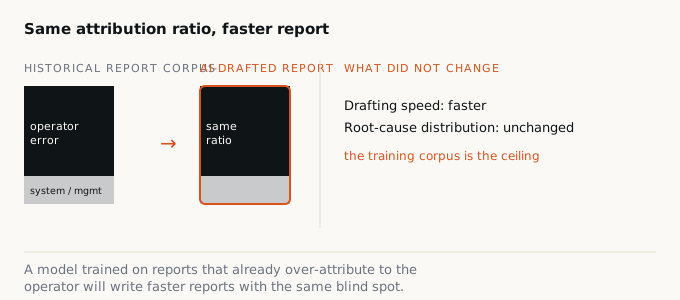 The Scout
 AI tools that draft post-incident investigation reports are pattern-matched against a corpus of past reports that already over-attributes causation to operator error, so faster drafting will scale that bias, not correct it.
Aug 5, 2026 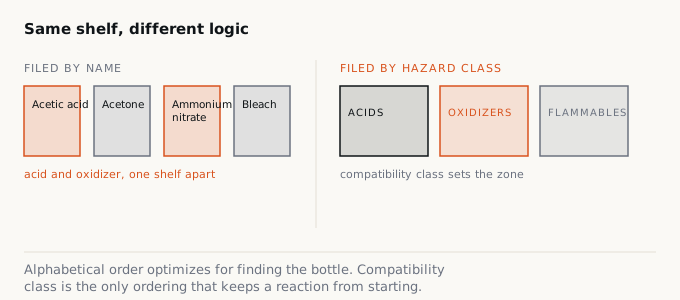 The Floor Walker
 Storing hazardous chemicals in alphabetical order by product name optimizes for finding the bottle fast, not for what happens when an acid and an oxidizer end up shelved next to each other because their names start with the same letter.
Aug 5, 2026 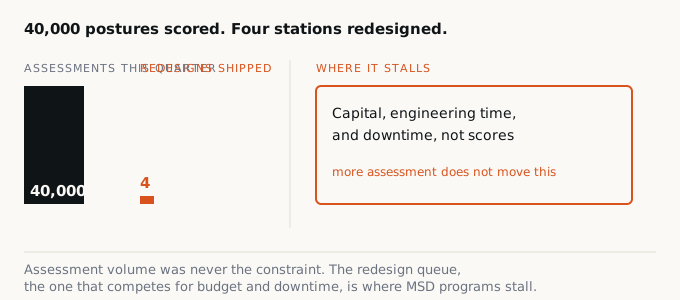 The Scout
 Automated posture scoring removes a bottleneck that was never binding. Ergonomics programs are limited by the rate of job redesign, so a vision deployment should be judged on redesigns shipped, not assessments generated.
Aug 5, 2026 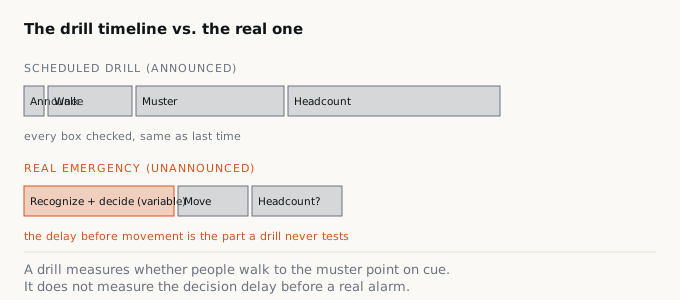 The Floor Walker
 A drill everyone knows is coming measures whether people can walk to the muster point on cue, not whether they can recognize a real alarm, pick the nearest usable exit over the habitual one, and get counted accurately under actual confusion.
Aug 5, 2026 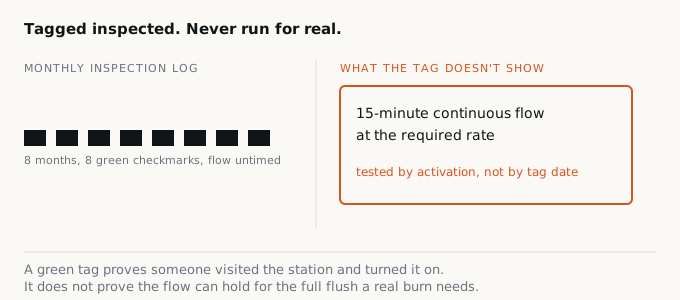 The Skeptic
 An installed, inspected, unactivated plumbed eyewash fails on water quality, temperature, and flow, and every one of those failures is invisible from the outside. The weekly activation is the control, not the fixture.
Aug 5, 2026 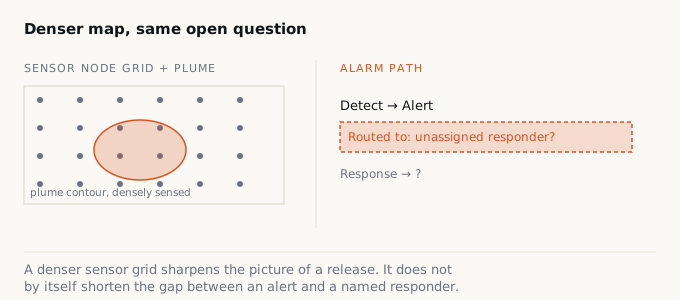 The Scout
 Denser fixed gas-sensor networks sharpen the spatial picture of a release, but that picture only cuts time-to-safe-response if alarm routing and response ownership improve with it, otherwise a denser map is just a better record of what already went wrong.
Aug 5, 2026 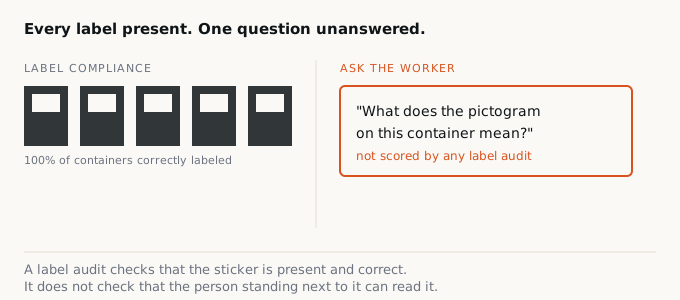 The Skeptic
 HazCom compliance is measured by label presence, SDS access, and training completion. None of those measure whether a worker can state the hazard, and the standard's own word for the training it requires is effective.
Aug 5, 2026 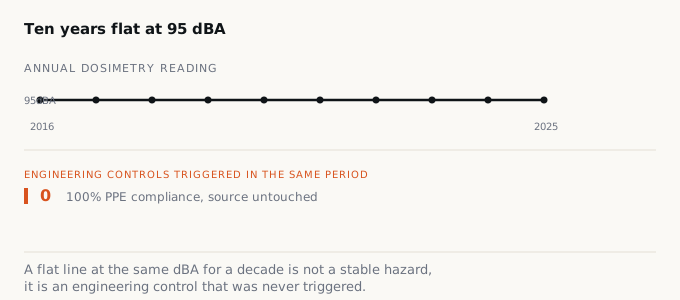 The Floor Walker
 OSHA's hierarchy of controls puts engineering fixes above earplugs for a reason: a hearing conservation program that hits 100 percent PPE compliance and still logs the same 95-plus dBA reading year after year isn't preventing hearing loss, it's documenting exposure at high resolution.
Aug 5, 2026 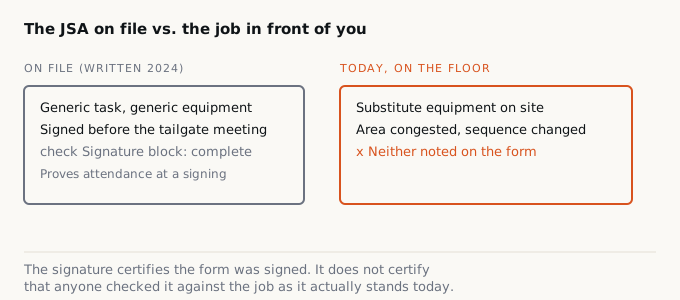 The Skeptic
 A job safety analysis pulled from a binder and signed before the tailgate meeting protects the paperwork, not the crew, when the equipment, the area, or the sequence in front of them today doesn't match the one the form describes.
Aug 5, 2026 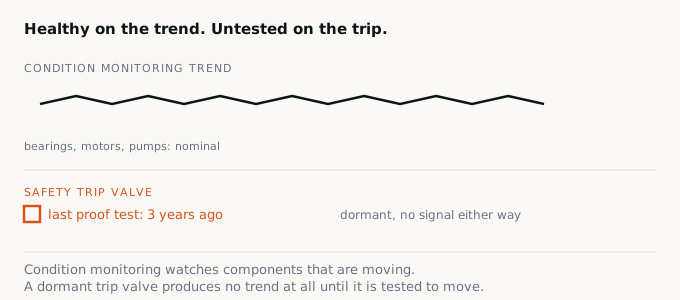 The Scout
 Condition monitoring finds degradation that announces itself. A proof test finds dangerous failures that do not, which is why PdM coverage cannot be traded for a longer proof test interval without changing the PFD you certified.
Aug 5, 2026 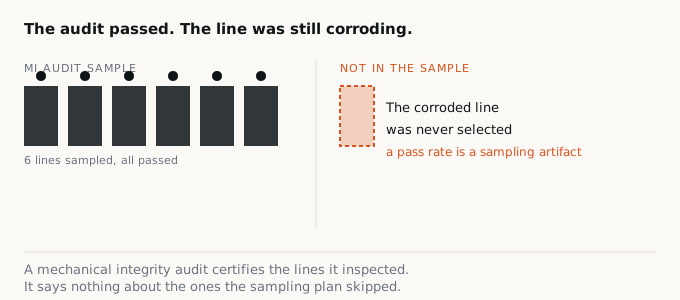 The Skeptic
 A fully compliant MI program fails where the paperwork does not look: in which equipment made the inspection list, and on what basis the interval was set. Completion rate is not coverage.
Aug 5, 2026 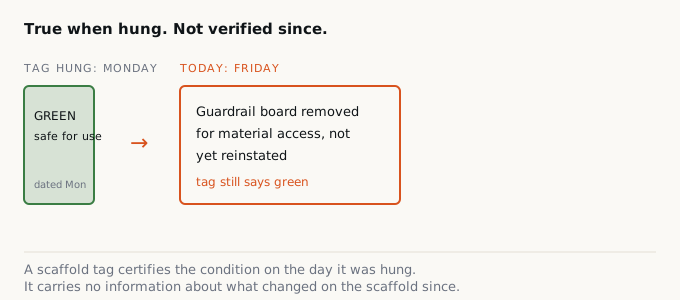 The Floor Walker
 A scaffold tag records one competent person's judgment at handover. OSHA requires an inspection before each work shift, because the hazard is what three trades did to the scaffold since.
Aug 5, 2026 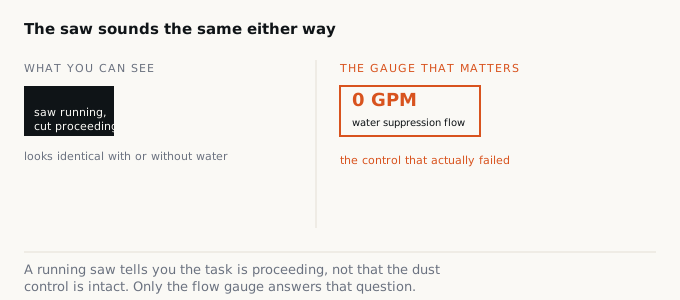 The Floor Walker
 Table 1 protection is conditional on operating and maintaining the control as the manufacturer specifies. An empty water tank or a loaded filter removes the protection without stopping the tool, and nothing on the job tells you it happened.
Aug 5, 2026 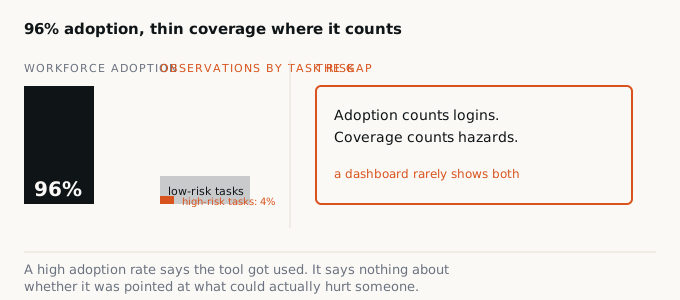 The Skeptic
 A safety observation platform can hit near-universal login and submission rates while the highest-risk tasks in the building go unobserved, because usage and hazard-capture are different metrics and only one of them makes a tidy slide.
Aug 4, 2026 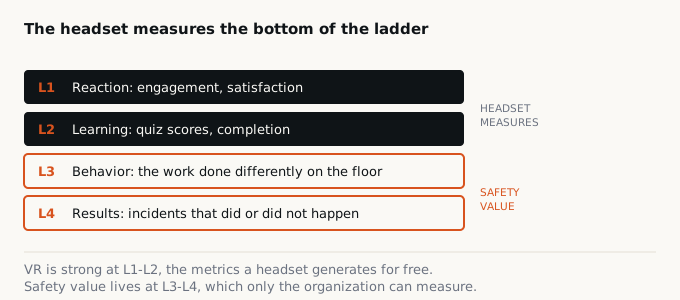 The Scout
 VR safety training's value is established only by measured behavior change on the floor. Completion rates, engagement scores, and headset hours cannot stand in for it, no matter how good the simulation feels.
Aug 3, 2026 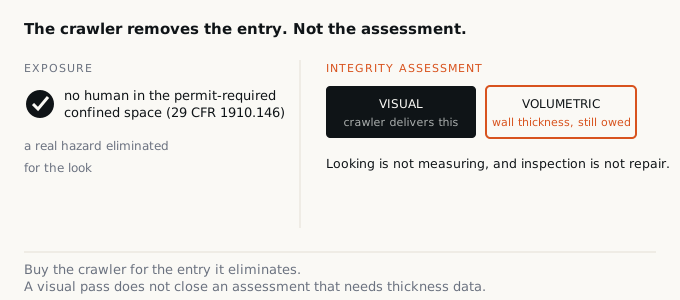 The Scout
 A robotic inspection crawler removes the human entry hazard from a tank or vessel, but it does not, by itself, satisfy an integrity assessment that requires quantitative wall-thickness data. Buy it for the exposure it eliminates, not for the assessment it cannot finish.
Aug 2, 2026 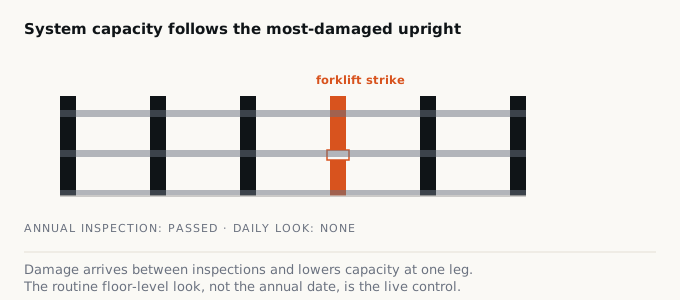 The Floor Walker
 A racking system's capacity is governed by its most-damaged upright. A facility with a formal annual inspection but no routine floor-level look is running on residual capacity it has never measured.
Aug 1, 2026 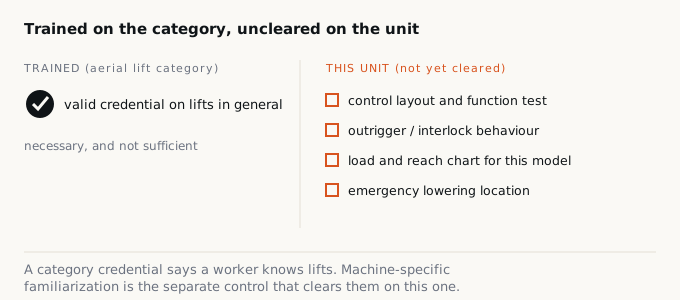 The Floor Walker
 An operator certified on aerial lifts can still be untrained on the specific unit in front of them. Familiarization on that unit, not the wallet card, is the control that closes the gap.
Jul 31, 2026 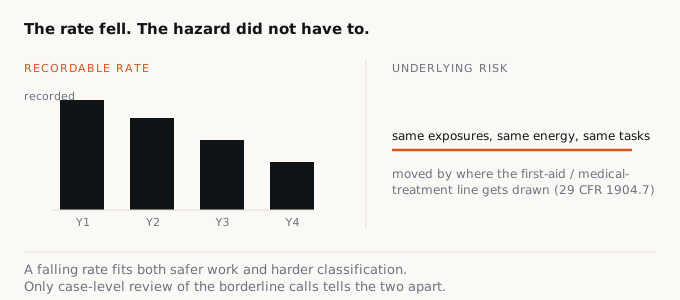 The Skeptic
 A dropping recordable rate is equally consistent with safer work and with more aggressive classification. Only case-level review of the decisions, not the total, can tell the two apart.
Jul 30, 2026 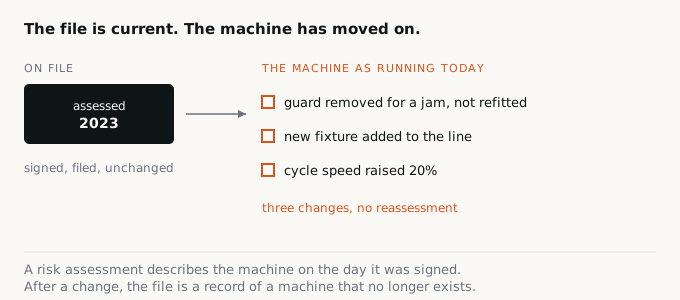 The Skeptic
 The value of a machine risk assessment is set by when it was last reconciled against the equipment as it actually runs today, not by the fact that a document exists in the file.
Jul 29, 2026 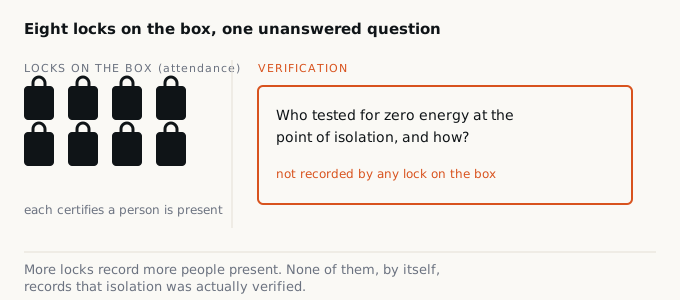 The Skeptic
 Adding locks to a group lockbox increases the number of locks, not the certainty that zero energy was ever confirmed. The box records attendance; someone still has to verify isolation.
Jul 28, 2026 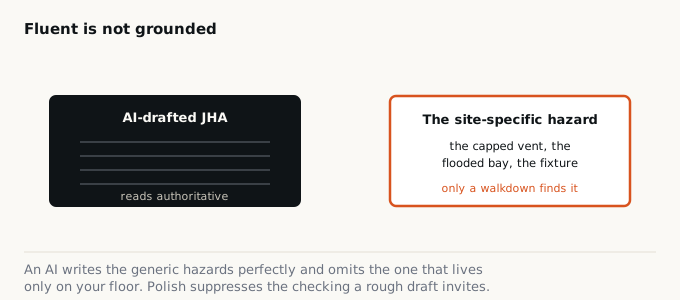 The Scout
 A language model writes a job hazard analysis from generic patterns, not from your floor, so it will omit the site-specific hazard a walkdown would catch and dress the omission in confident, standard-sounding prose.
Jul 18, 2026 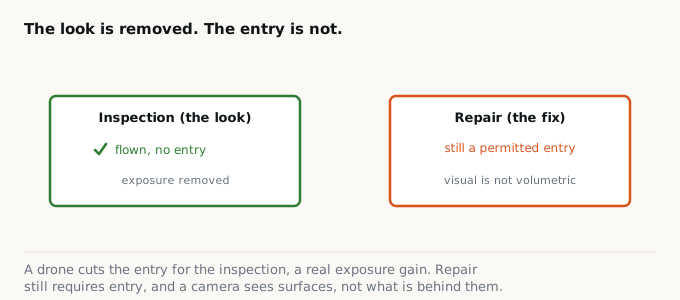 The Scout
 Inspection drones genuinely cut hazardous entries and work at height for the look, but a camera sees surfaces, not what is behind them, and it never removes the entry that repair still requires.
Jul 17, 2026 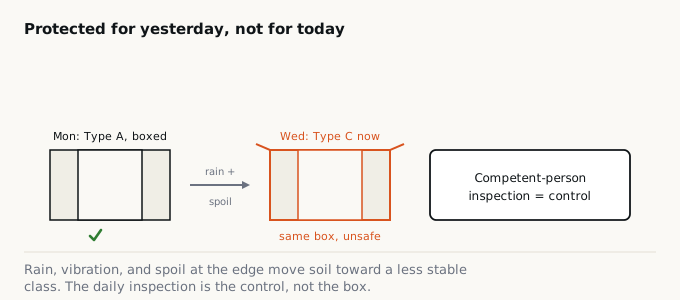 The Floor Walker
 Cave-in protection is not the trench box in your yard; it is today's competent-person inspection matching the protective system to the soil as it actually is right now.
Jul 16, 2026 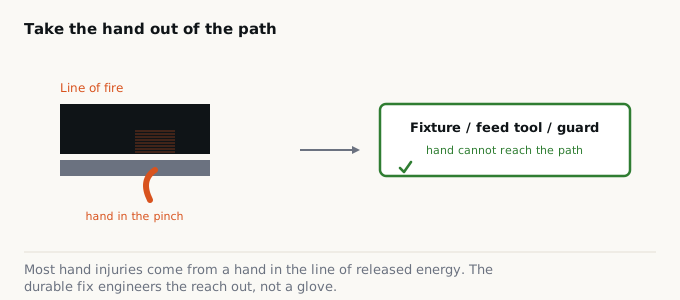 The Floor Walker
 Most serious hand injuries happen because a body part was placed in the line of released energy, so the durable control is redesigning the task so the hand is never in that line, not a cut-resistant glove and a reminder to keep clear.
Jul 15, 2026 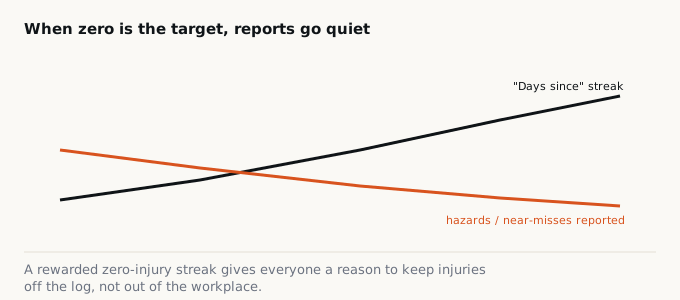 The Skeptic
 Attach recognition and pressure to a zero-injury number and you give everyone a reason to keep injuries off the log rather than out of the workplace, so the reported figure can fall while the real risk holds or climbs.
Jul 14, 2026 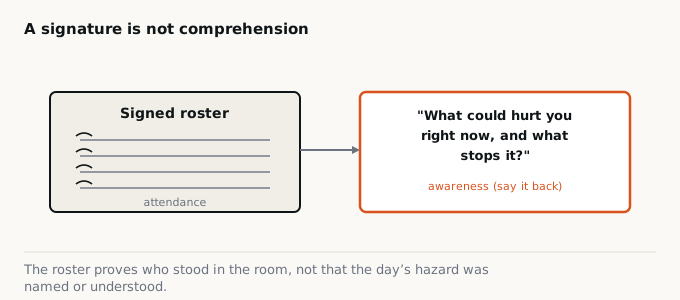 The Skeptic
 A toolbox-talk signature sheet documents who stood in the room, not whether anyone understood the hazard or that the day's actual risks were named.
Jul 13, 2026 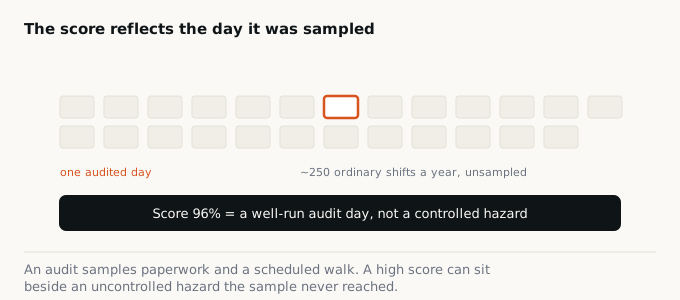 The Skeptic
 A high third-party audit score certifies documentation and a well-run visit, not that a serious hazard is controlled on an ordinary unannounced day.
Jul 12, 2026 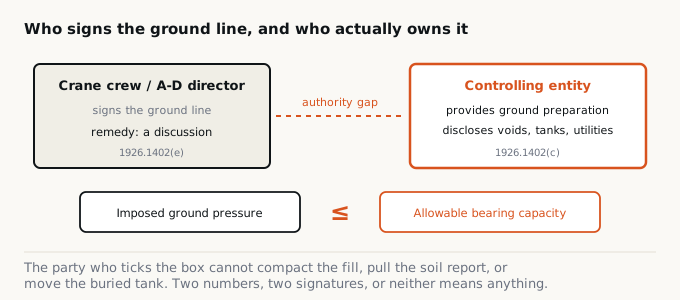 The Floor Walker
 OSHA puts ground conditions on the controlling entity, so a lift checklist that has the crane crew tick off ground bearing capacity is collecting a signature from the one party that cannot fix, and usually cannot see, the thing most likely to drop the crane.
Jul 9, 2026 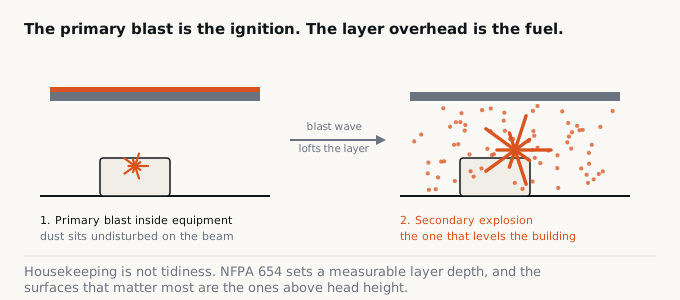 The Floor Walker
 The primary blast is rarely what kills. It lofts the dust that has settled on beams and ledges overhead, and that secondary explosion is the one that levels the building.
Jul 8, 2026 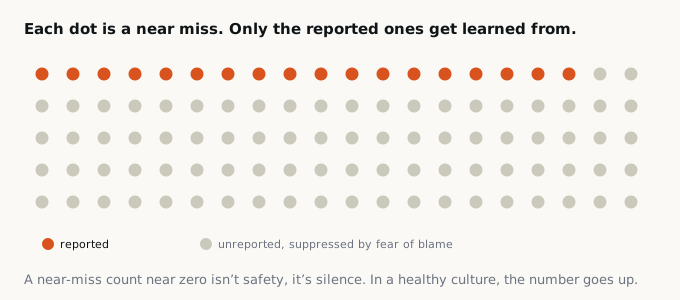 The Floor Walker
 A plant that reports almost no near misses isn't safe, it's quiet. And a rising near-miss count is usually a sign of health, not danger.
Jul 5, 2026 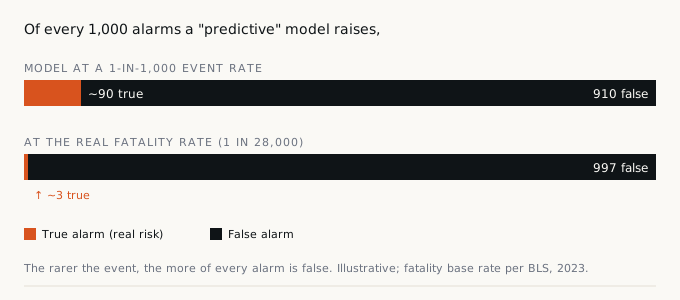 The Skeptic
 The rarer the incident, the more a 'predictive' model gets wrong every time it fires, and it's trained on the injuries you already have, not the ones that kill.
Jul 4, 2026 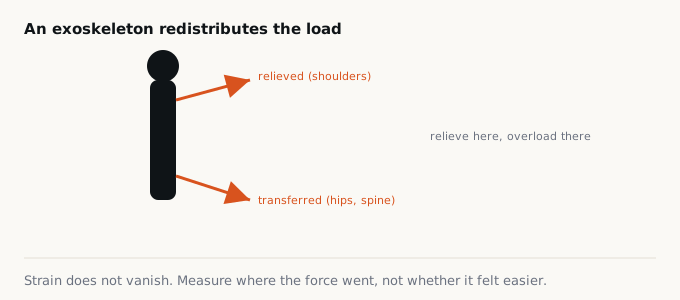 The Scout
 Occupational exos don't erase strain, they redistribute it. Measure the transfer, not comfort.
Jul 2, 2026 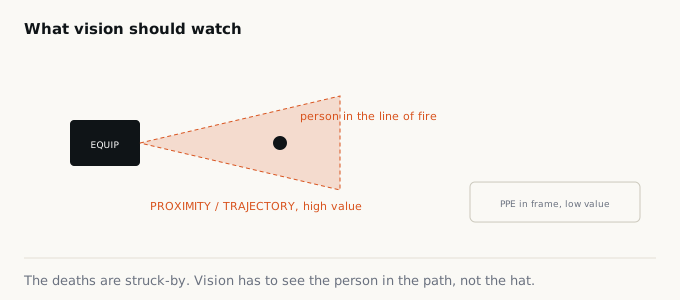 The Scout
 PPE detection is the easy, low-value use of vision. Struck-by events are among the incidents that actually kill people, and that is where vision has to prove it can see a person in the line of fire.
Jul 1, 2026 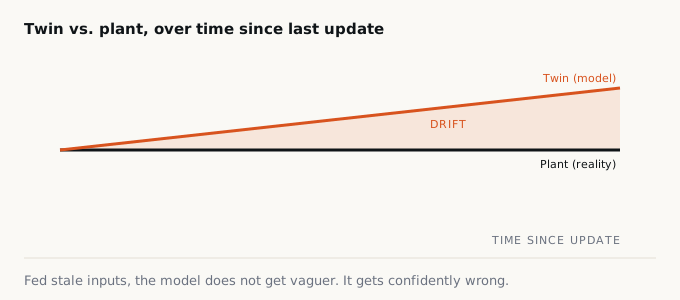 The Scout
 Fed stale P&IDs and drifted parameters, a twin gives confident wrong answers, and the data upkeep is the cost the demo hides.
Jun 30, 2026 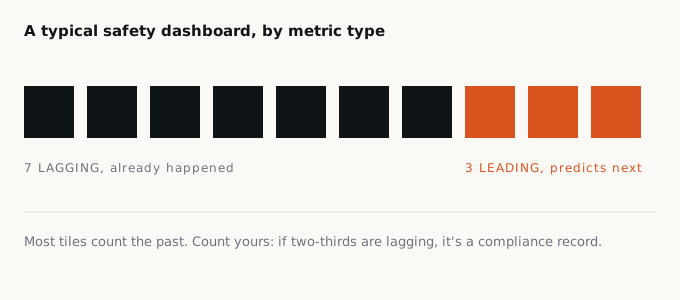 The Skeptic
 Count the metrics on any safety dashboard. If most describe what already happened, you bought a compliance record, not an early-warning system.
Jun 29, 2026 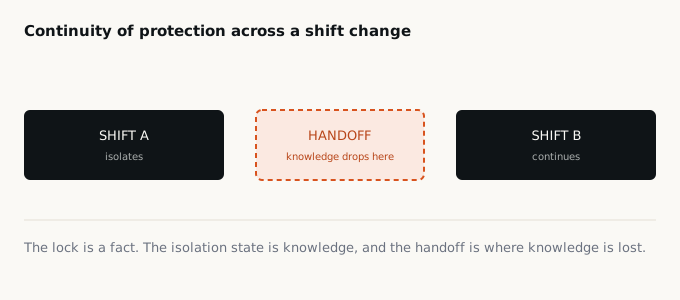 The Floor Walker
 The written procedure isn't the control. The handoff between shifts is where energy isolation actually fails, and it's the part audits rarely test.
Jun 27, 2026 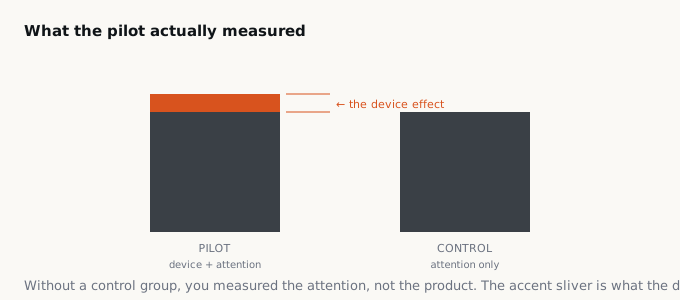 The Scout
 A 12-week pilot can't tell you whether a sensor works, because the attention around the pilot moves the numbers as much as the device does.
Jun 26, 2026 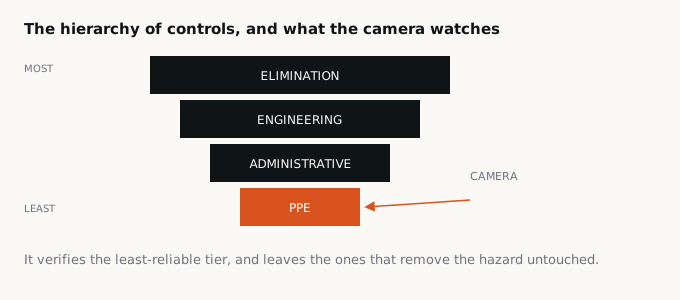 The Skeptic
 Camera systems verify one thing, that a piece of equipment is visible in frame. That's the bottom of the hierarchy of controls, dressed up as safety intelligence.
Jun 25, 2026 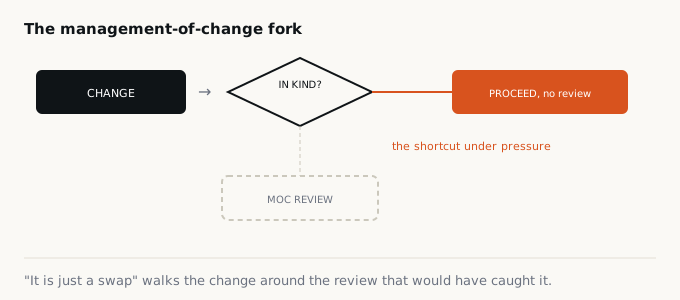 The Floor Walker
 The MOC step skipped under schedule pressure isn't a footnote to the incident, it is the incident.
Jun 24, 2026 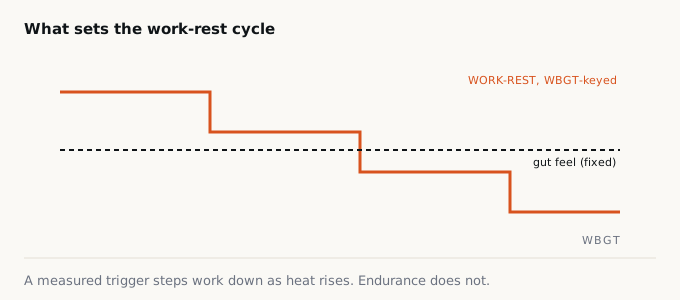 The Floor Walker
 Work-rest cycles keyed to measured WBGT thresholds outperform a toughness culture.
Jun 23, 2026 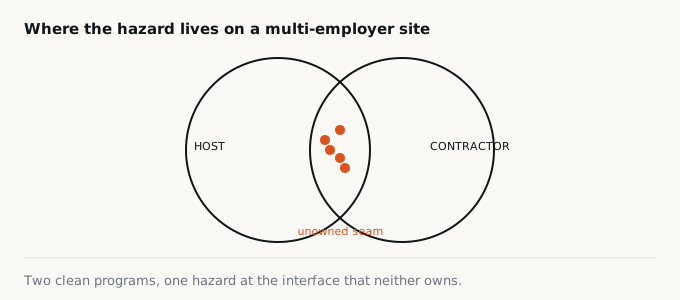 The Floor Walker
 On mixed sites, incident risk concentrates at the interface between employers, who owns that seam predicts outcomes more than either party's own program.
Jun 22, 2026 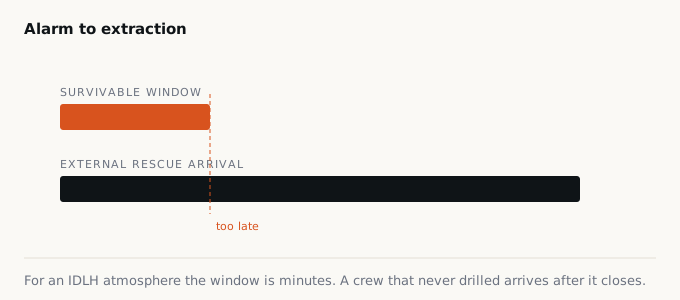 The Floor Walker
 A permit that names a rescue plan means nothing if no one has practiced it, and "call 911" is usually too slow.
Jun 21, 2026 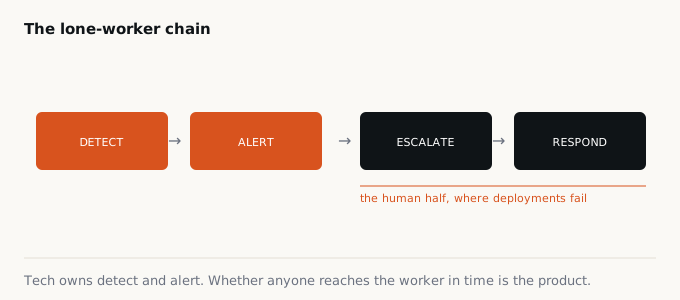 The Skeptic
 The check-in isn't the safeguard, the escalation behind it is. The real metric is measured time-to-rescue.
Jun 20, 2026 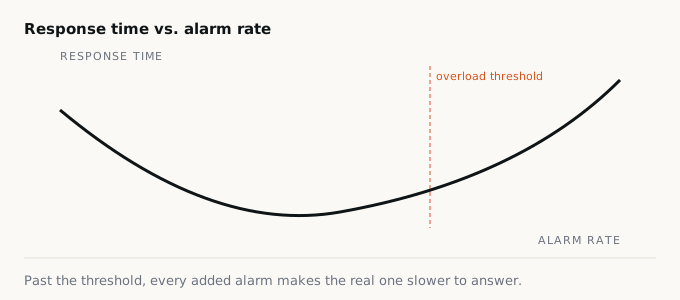 The Skeptic
 Past a threshold, adding alerts raises response latency instead of lowering it.
Jun 19, 2026 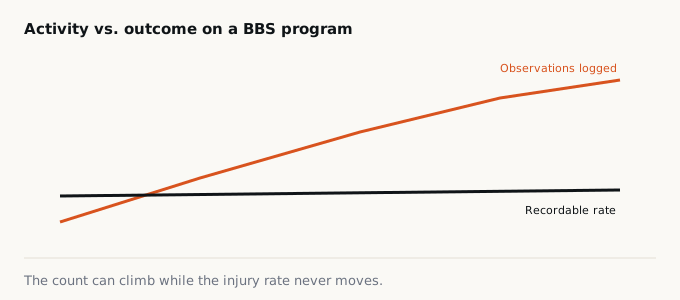 The Skeptic
 If your BBS KPI is observation volume, you will get observations, not fewer injuries.
Jun 18, 2026 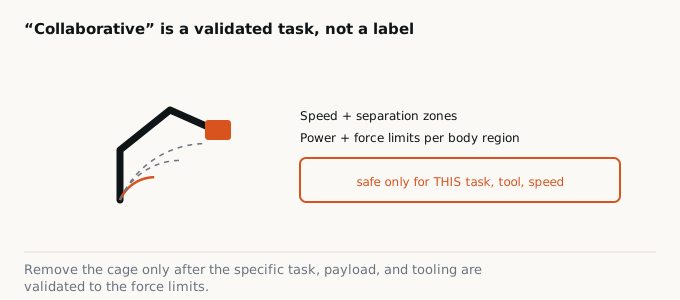 The Scout
 A cobot is safe only when its speed-and-separation monitoring or power-and-force limits are validated for the specific task, payload, and tooling in front of it, not because the machine is sold under the label collaborative.
Jun 16, 2026 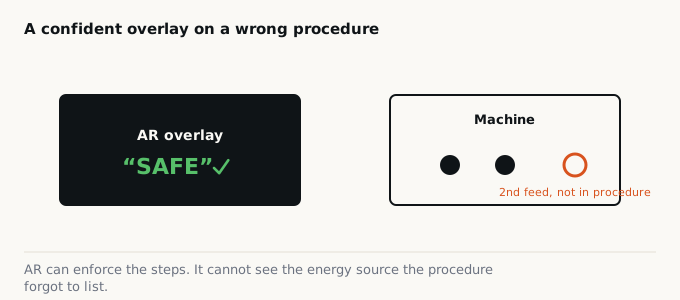 The Scout
 Augmented reality can enforce a correct isolation sequence and cut skipped steps, but an AR overlay built on an outdated energy-control procedure is more dangerous than paper because it turns a wrong instruction into a confident one.
Jun 13, 2026 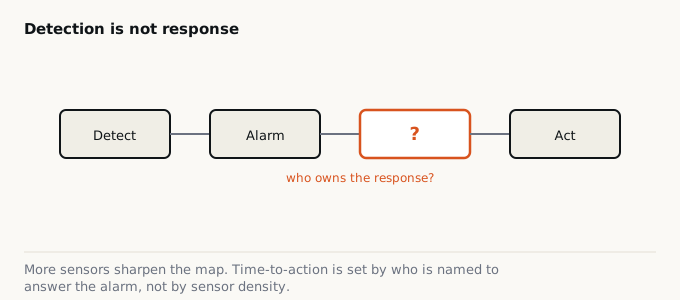 The Scout
 Networked gas sensors can turn point readings into a live area exposure map, but the value is set by alarm routing and who owns the response, not by how many sensors you hang.
Jun 9, 2026 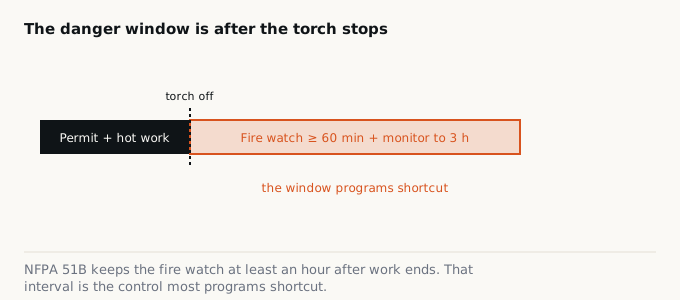 The Floor Walker
 Many hot-work fires ignite after the cutting stops, during or after the fire watch, so the post-job window is the control that prevents them, and it is the one most programs shortcut.
Jun 2, 2026 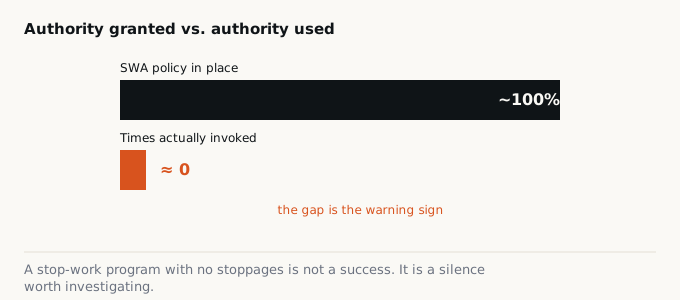 The Floor Walker
 Stop-work authority written into a policy is not a control; the only evidence it is real is that people actually invoke it and pay no lasting cost when they do, so a clean record of zero stoppages is a warning sign, not a trophy.
May 26, 2026 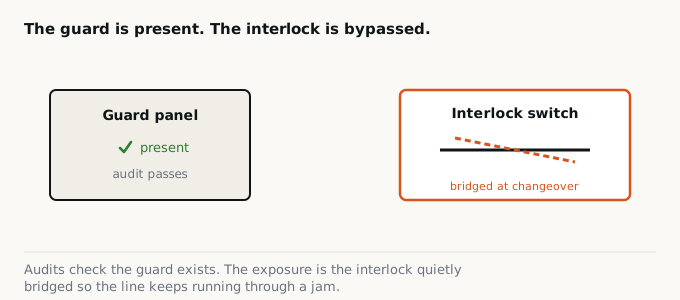 The Floor Walker
 On a real line the exposure is rarely a missing guard; it is an interlock defeated for throughput, cleaning, or a jam at changeover, and that defeat is invisible to an inspection that only checks the guard is present.
May 19, 2026 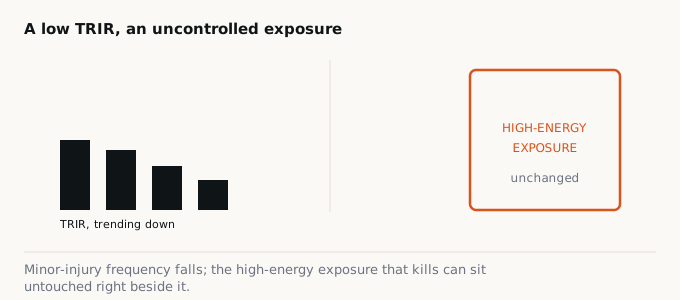 The Skeptic
 Because the recordable rate is a low-count figure shaped by case management and the first-aid line, a falling TRIR can sit right alongside rising fatality exposure, so benchmarking budget to an industry average can steer money away from what kills people.
May 12, 2026 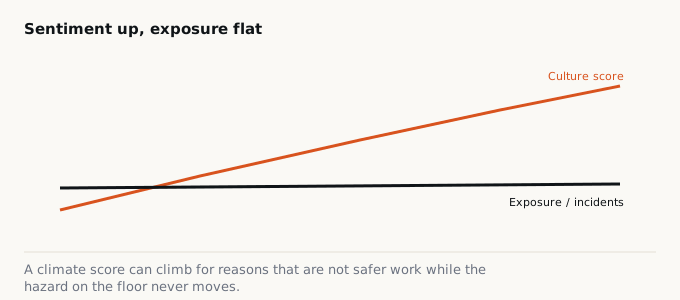 The Skeptic
 A rising safety-climate score measures who answered and how they felt, not whether exposure or incidents fell, so treat it as one input and never as an outcome.
May 5, 2026 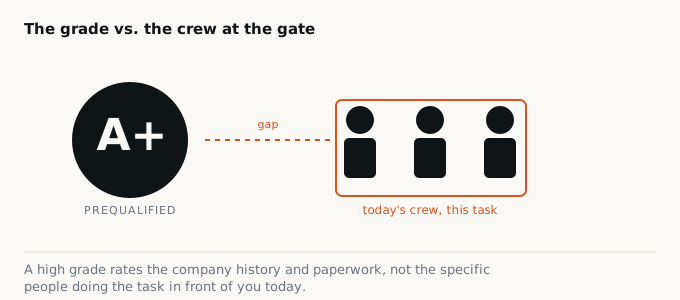 The Skeptic
 A contractor's prequal score rates its history and programs; it cannot tell you whether today's specific crew is trained, competent, and working safely on your site.
Apr 28, 2026 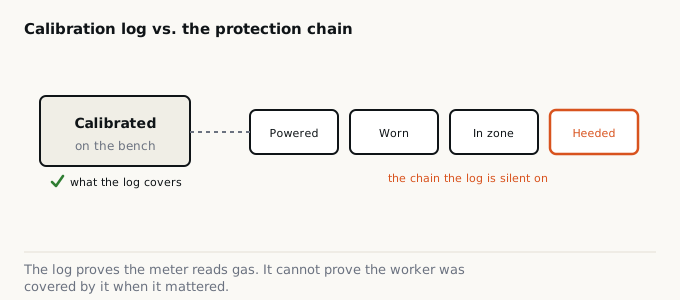 The Skeptic
 A bump-test or calibration record verifies device integrity; it says nothing about whether the monitor was worn, powered, in the breathing zone, and heeded.
Apr 21, 2026 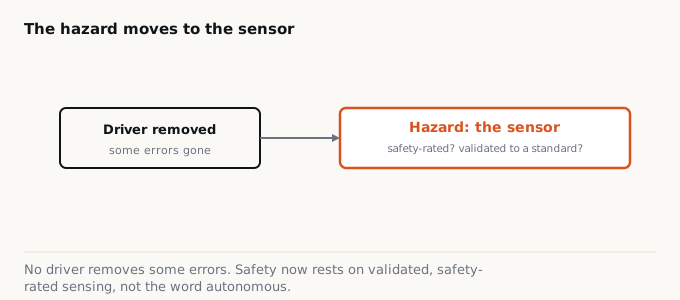 The Scout
 Removing the human driver from a warehouse vehicle removes some errors and introduces new ones, so safety around AMRs now rests on validated, safety-rated sensing and the standard the vehicle was commissioned to, not on the word autonomous.
Apr 14, 2026 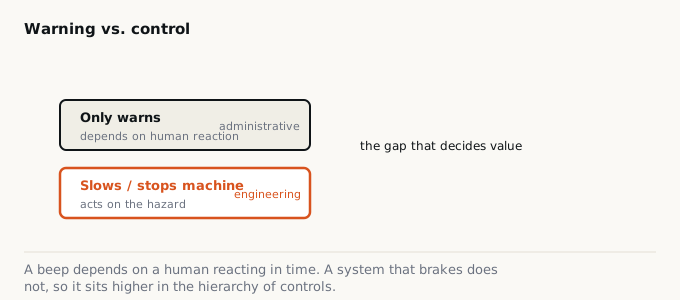 The Scout
 Proximity-detection systems can cut struck-by risk, but a system that only warns sits low in the hierarchy of controls, and its value hinges on whether it stops the machine or merely tells you it should have.
Apr 7, 2026 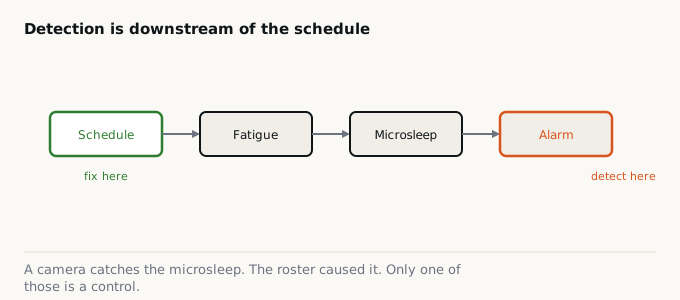 The Scout
 Fatigue-detection wearables and in-cab cameras catch the microsleep, but fatigue is a scheduling problem, so detection without a roster change just surveils the symptom and moves the blame onto the tired worker.
Mar 31, 2026 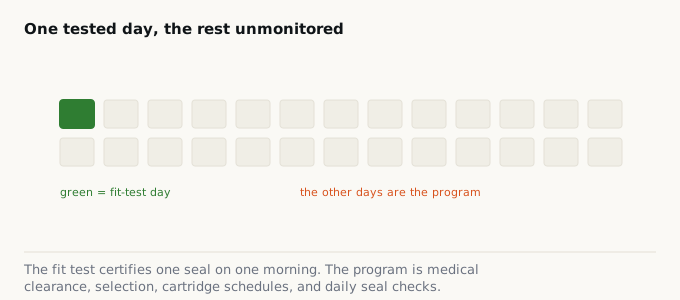 The Floor Walker
 A passing annual fit test proves a seal on one face on one day; if you cannot name your cartridge change schedule and your medical clearance process, you do not have a respirator program.
Mar 24, 2026 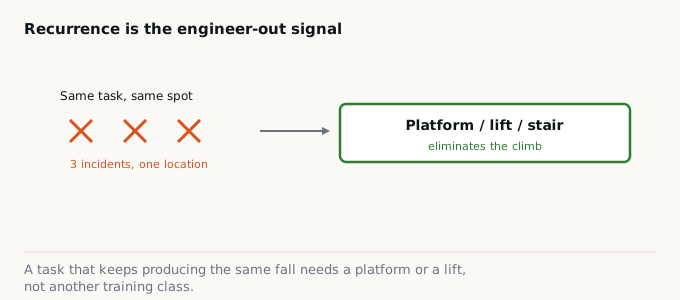 The Floor Walker
 Most ladder injuries are not a training problem; they are a task that should never have been done from a ladder, so the durable fix is removing the ladder, not retraining the user.
Mar 17, 2026 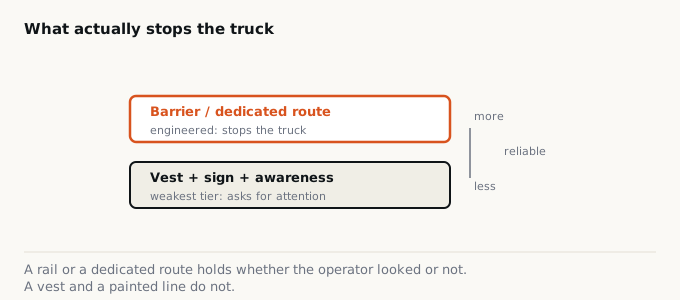 The Floor Walker
 If pedestrians and powered industrial trucks share the same floor and the only thing keeping them apart is attention, the control has already failed.
Mar 10, 2026 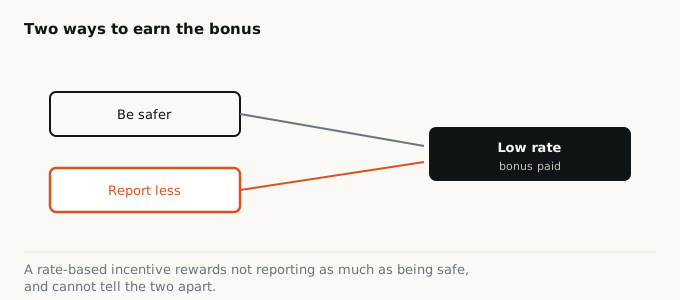 The Skeptic
 If your incentive pays out for a low recordable rate, you are rewarding non-reporting alongside actual safety, and OSHA has formally warned that such programs can unlawfully discourage reporting.
Mar 3, 2026 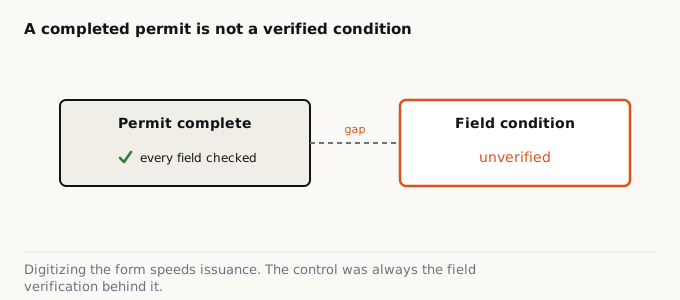 The Skeptic
 If your e-permit rollout raised issuance speed and completion rates without adding field verification steps, you improved paperwork, not safety.
Feb 24, 2026 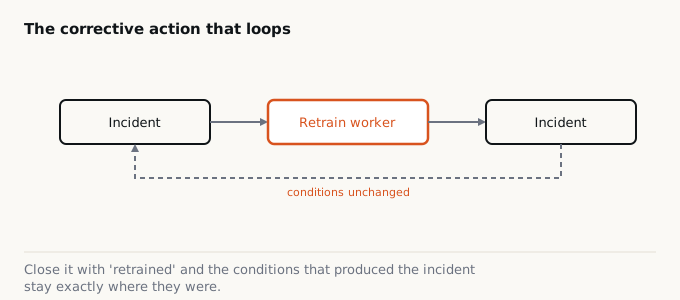 The Skeptic
 Closing an incident with counseling and retraining treats a system failure as a personal one, and it leaves every condition that produced the incident exactly where it was.
Feb 17, 2026 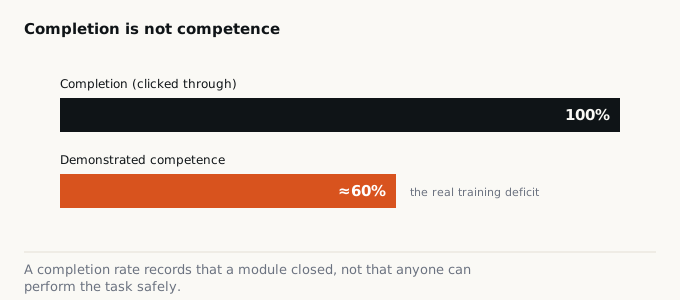 The Skeptic
 A completion rate proves people advanced through modules; it does not prove anyone can perform the task safely, and OSHA has said so for decades.
Feb 10, 2026