What's Coming
AI vision, wearables, digital twins, predictive safety, where the field is heading.
-
 The Scout
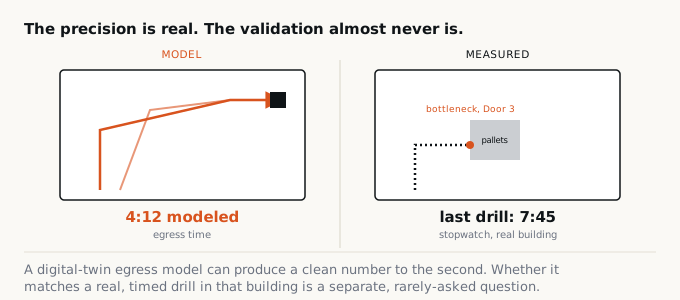
The Evacuation Model Says 4 Minutes. Has Anyone Timed the Real One?
Digital-twin and agent-based simulation software can now produce a precise, color-coded egress time for any building. The precision is real. The validation against the actual workforce, in the actual building, almost never is.
-
 The Scout
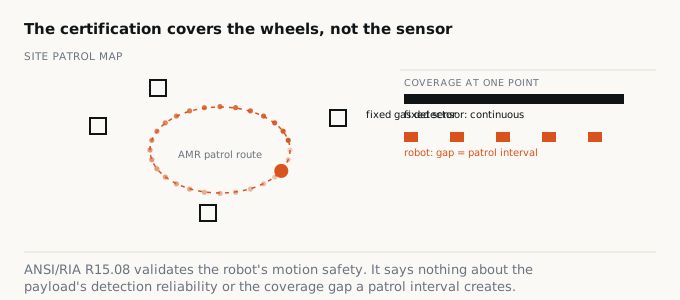
Robots Can Now Sniff for Leaks. Nobody Has Certified How Well.
Autonomous mobile robots are increasingly built to carry gas sensors and thermal cameras on patrol routes, but the standard that certifies the robot's movement says nothing about the payload's detection reliability, and almost no site is yet asking what the patrol interval actually costs in coverage.
-
 The Scout
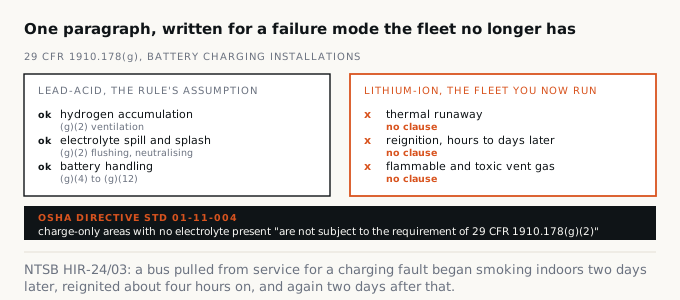
Your Charging Room Is Still Set Up for Acid
If your battery charging procedure was written for lead-acid and the batteries in the room are now lithium-ion, the site is compliant with a United States OSHA rule aimed at hydrogen and spilled electrolyte while the credible event is thermal runaway, and nothing in the compliance record will flag the mismatch.
-
 The Scout
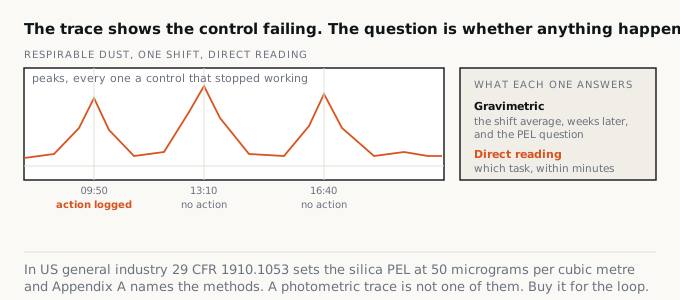
Direct-reading dust monitors are a control loop, not a sample
Pull a month of real-time dust traces and match every peak to an action taken. If the peaks generated charts and no work changed, you bought a recorder.
-
 The Scout
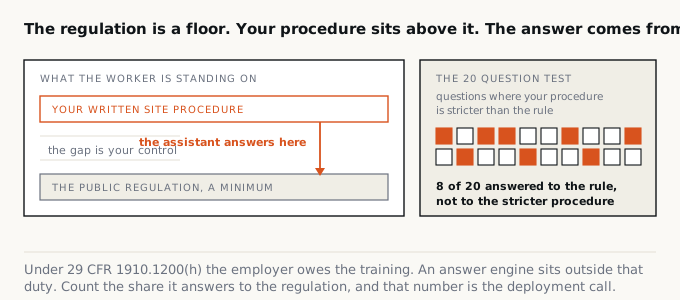
When the assistant answers to the regulation, not your procedure
Put 20 questions to your site assistant where your own written procedure is stricter than the rule. The share it answers to the regulation is your deployment decision.
-
 The Scout
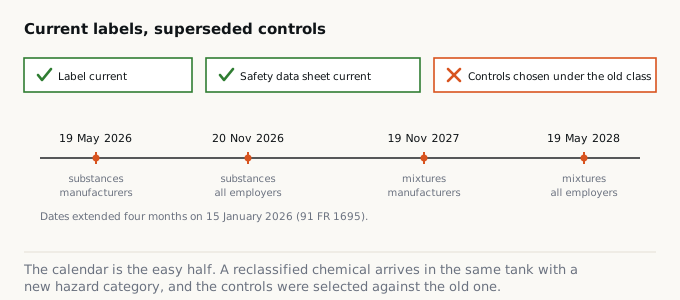
The HazCom Dates Are a Calendar Problem. The Reclassification Is Not.
A site can hold a current label and a current safety data sheet for every chemical it uses and still be running exposure controls that were selected against a hazard classification the 2024 rule has since replaced.
-
 The Scout
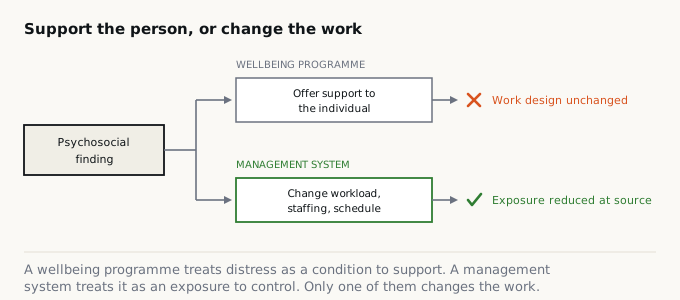
Psychosocial Risk Is Becoming a Hazard, Not a Programme
If no psychosocial finding at your site has ever changed how work is designed, staffed or scheduled, you are running a wellbeing programme and not a hazard control.
-
 The Scout
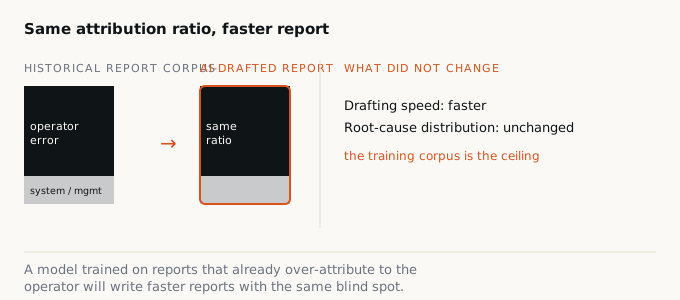
The AI That Writes Your Incident Report Learned Root Cause From the Reports Before It
AI tools that draft post-incident investigation reports are pattern-matched against a corpus of past reports that already over-attributes causation to operator error, so faster drafting will scale that bias, not correct it.
-
 The Scout
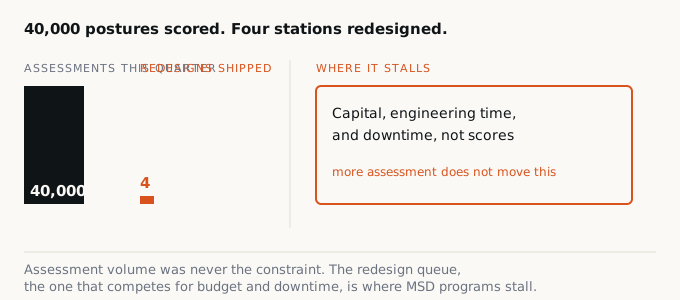
Scoring ten thousand postures does not move one workstation
Automated posture scoring removes a bottleneck that was never binding. Ergonomics programs are limited by the rate of job redesign, so a vision deployment should be judged on redesigns shipped, not assessments generated.
-
 The Scout
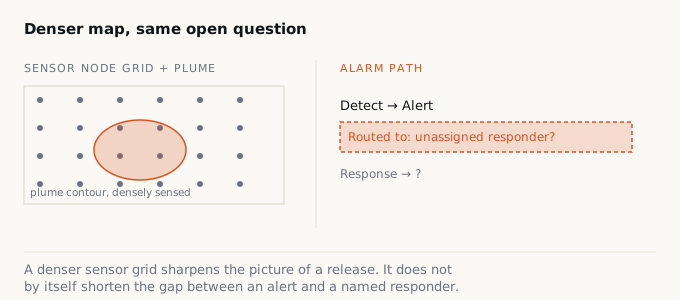
The Gas Map Gets Sharper. Does the Response Get Faster?
Denser fixed gas-sensor networks sharpen the spatial picture of a release, but that picture only cuts time-to-safe-response if alarm routing and response ownership improve with it, otherwise a denser map is just a better record of what already went wrong.
-
 The Scout
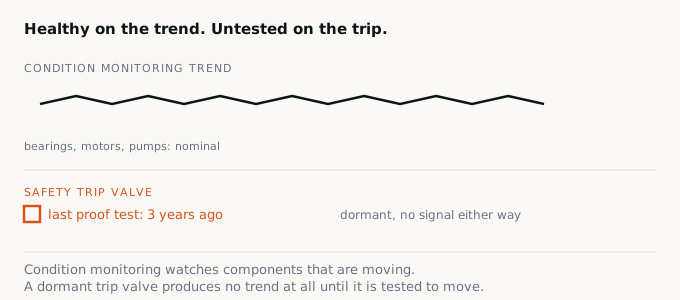
Predictive maintenance is optimising for uptime. Your safety layer is not.
Condition monitoring finds degradation that announces itself. A proof test finds dangerous failures that do not, which is why PdM coverage cannot be traded for a longer proof test interval without changing the PFD you certified.
-
 The Scout
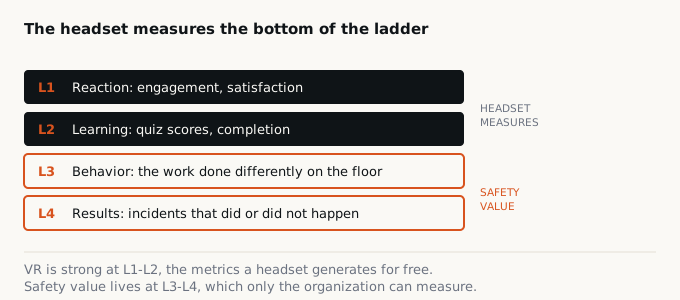
The Headset Logs Hours. The Floor Logs Behavior. Only One of Those Is Training.
VR safety training's value is established only by measured behavior change on the floor. Completion rates, engagement scores, and headset hours cannot stand in for it, no matter how good the simulation feels.
-
 The Scout
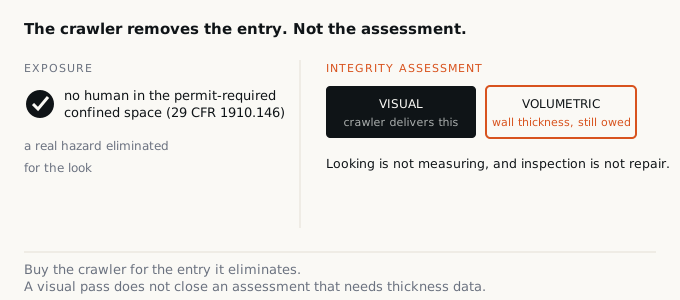
The Crawler Goes In So Nobody Has To. That Solves One Problem, Not Two.
A robotic inspection crawler removes the human entry hazard from a tank or vessel, but it does not, by itself, satisfy an integrity assessment that requires quantitative wall-thickness data. Buy it for the exposure it eliminates, not for the assessment it cannot finish.
-
 The Scout
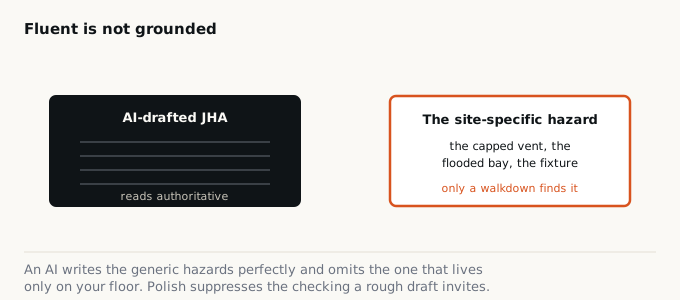
An AI can draft your JHA. It cannot do it.
A language model writes a job hazard analysis from generic patterns, not from your floor, so it will omit the site-specific hazard a walkdown would catch and dress the omission in confident, standard-sounding prose.
-
 The Scout
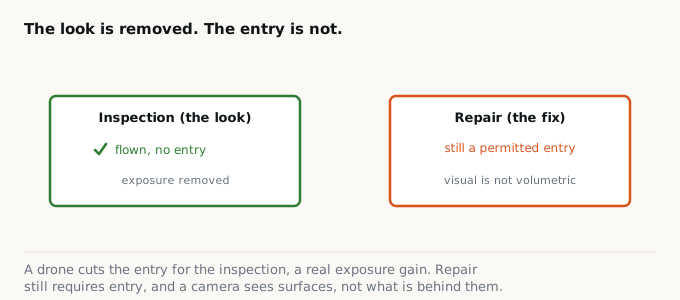
The drone saw the tank. It did not enter it.
Inspection drones genuinely cut hazardous entries and work at height for the look, but a camera sees surfaces, not what is behind them, and it never removes the entry that repair still requires.
-
 The Scout
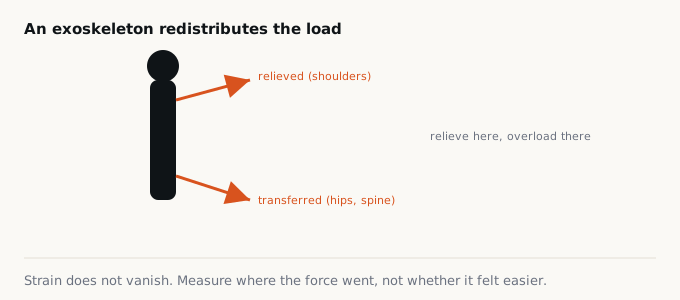
An exoskeleton moves the load, the question is where
Occupational exos don't erase strain, they redistribute it. Measure the transfer, not comfort.
-
 The Scout
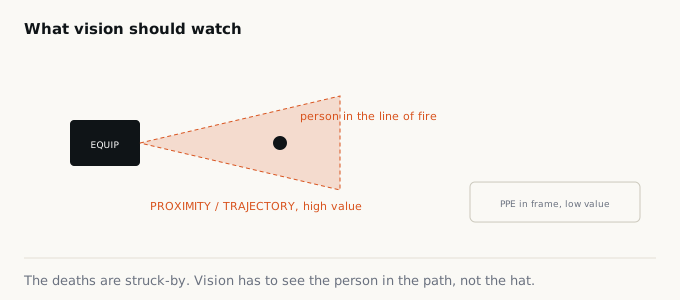
Computer vision's real job isn't watching for hard hats
PPE detection is the easy, low-value use of vision. Struck-by events are among the incidents that actually kill people, and that is where vision has to prove it can see a person in the line of fire.
-
 The Scout
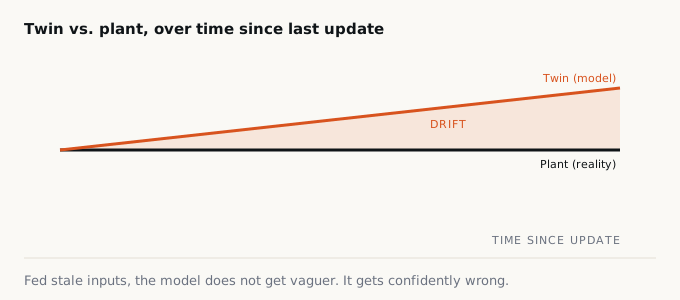
A digital twin is only as safe as its last update
Fed stale P&IDs and drifted parameters, a twin gives confident wrong answers, and the data upkeep is the cost the demo hides.
-
 The Scout
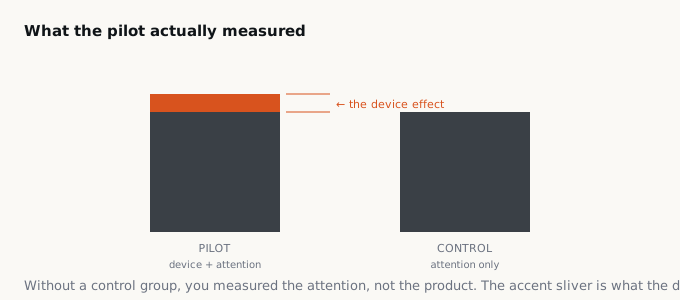
Wearables promised fewer slips. What the evidence actually shows.
A 12-week pilot can't tell you whether a sensor works, because the attention around the pilot moves the numbers as much as the device does.
-
 The Scout
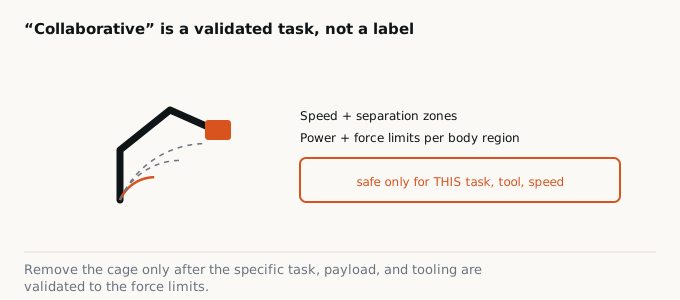
Collaborative removes the cage, not the hazard
A cobot is safe only when its speed-and-separation monitoring or power-and-force limits are validated for the specific task, payload, and tooling in front of it, not because the machine is sold under the label collaborative.
-
 The Scout
An AR overlay is only as honest as the procedure behind it
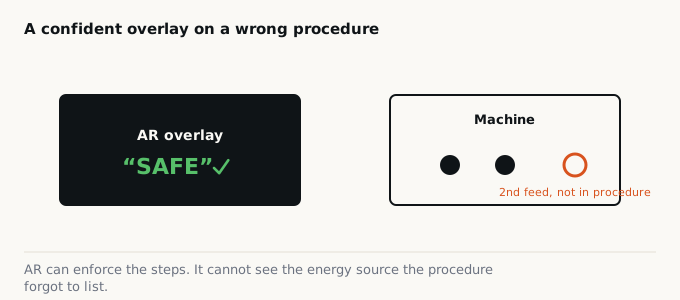
Augmented reality can enforce a correct isolation sequence and cut skipped steps, but an AR overlay built on an outdated energy-control procedure is more dangerous than paper because it turns a wrong instruction into a confident one.
-
 The Scout
A gas map is only as fast as who answers it
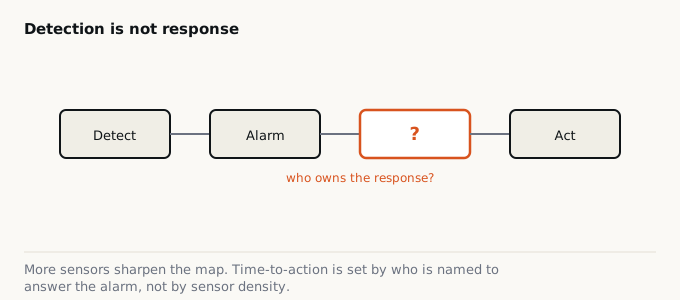
Networked gas sensors can turn point readings into a live area exposure map, but the value is set by alarm routing and who owns the response, not by how many sensors you hang.
-
 The Scout
Nobody is driving, which is the point and the problem
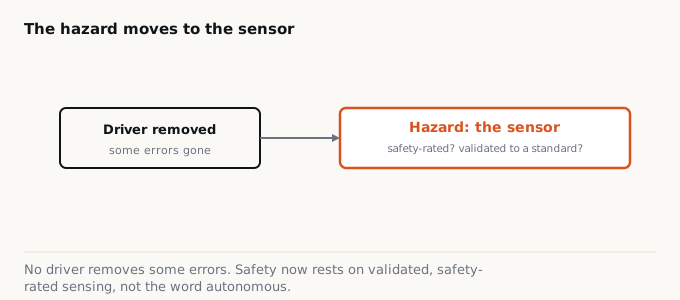
Removing the human driver from a warehouse vehicle removes some errors and introduces new ones, so safety around AMRs now rests on validated, safety-rated sensing and the standard the vehicle was commissioned to, not on the word autonomous.
-
 The Scout
The beep is not the barrier
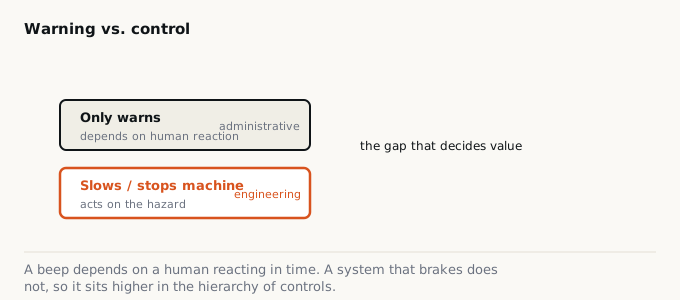
Proximity-detection systems can cut struck-by risk, but a system that only warns sits low in the hierarchy of controls, and its value hinges on whether it stops the machine or merely tells you it should have.
-
 The Scout
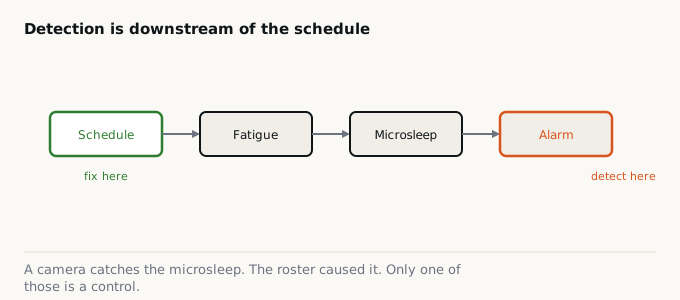
Watching the eyelids instead of fixing the roster
Fatigue-detection wearables and in-cab cameras catch the microsleep, but fatigue is a scheduling problem, so detection without a roster change just surveils the symptom and moves the blame onto the tired worker.