Watching the eyelids instead of fixing the roster
Fatigue-detection wearables and in-cab cameras catch the microsleep, but fatigue is a scheduling problem, so detection without a roster change just surveils the symptom and moves the blame onto the tired worker.
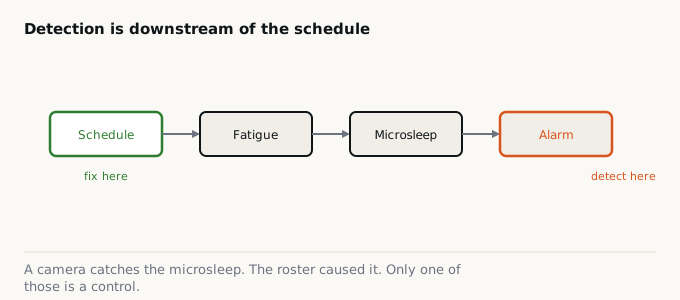
The demos are genuinely impressive. A band on the wrist infers alertness from heart-rate and movement data. A camera above the dash tracks eyelid closure and head nods and sounds an alarm a half-second into a microsleep. The pitch writes itself: catch fatigue in the moment, before the moment becomes an incident. For an EHS director staring at a fleet-fatigue or long-shift exposure, that feels like a control finally arriving.
It is worth being clear-eyed about what these tools do well. They can detect. What they cannot do is decide why the eyelids were closing in the first place, and that question is where the actual safety lives.
Detection sits at the bottom of the hierarchy
NIOSH’s hierarchy of controls ranks interventions by how reliably they reduce risk. Elimination and substitution sit at the top because they remove the hazard without depending on a person. Engineering controls come next. Administrative controls and personal protective equipment sit at the bottom, because they work only when a human does the right thing, every time, under pressure. Fatigue detection is not even PPE. It is a warning device layered on top of an administrative control, alerting a worker to a hazard that the organization already built into the schedule.
That placement matters because of where fatigue comes from. NIOSH is direct about this: work-related fatigue is complex and stems from many sources, and the work-related drivers it names first are scheduling practices, night shifts, and extended hours that interfere with sleep. Those are design decisions. They are made in the rostering software, not behind the wheel. A detection band cannot shorten a fourteen-hour shift, cannot add rest between two consecutive shifts, and cannot undo a rotation that fights the worker’s circadian rhythm. It can only tell a person who was scheduled into fatigue that they are, in fact, fatigued.
The responsibility quietly shifts
Here is the part that should give a safety leader pause. Once an alertness alarm exists, the organizational story changes. The system warned you. You kept driving. Now the incident is a story about an individual who ignored a beep, not about a roster that put a tired human in a cab at 3 a.m. after a quick turnaround. The technology, deployed without a scheduling change, does not just fail to fix the hazard. It relocates the accountability for the hazard onto the most fatigued person in the system, who is the person least equipped to carry it.
NIOSH frames the same point from the other direction. Its work on fatigue treats detection technologies as one element inside a broader fatigue risk management system, not as a substitute for one. The reason is straightforward: a warning is only useful if there is a defensible response to it. If the alarm sounds and the answer is “push through, we are short-staffed,” the device has measured a failure it has no power to correct. The correction was upstream, in staffing levels, shift length limits, overtime policy, and the rules for what happens when a worker reports they are too fatigued to work safely.
What the technology is good for
None of this makes detection useless. Inside an organization that has already redesigned the schedule, a wearable or an in-cab camera can be a genuine backstop, a last layer that catches the residual risk no roster can fully eliminate, and a source of aggregate data that shows which shifts and routes still generate the most drowsiness. That data can feed the next scheduling revision. Used that way, detection is the confirmation on top of the control. Used as the control itself, it is surveillance with a safety label.
The order is the whole point. Fix the schedule, then measure what fatigue remains. Reverse the order and you have bought a very precise way to record that your roster is unsafe.
Before you invest
Before signing for any fatigue-detection technology, ask the vendor and your own operations leaders one question and listen for a real answer: when the device alarms on a fatigued worker mid-shift, what in our schedule, staffing, or rest rules changes in response, and who has the authority to pull that worker? If the honest answer is "nothing changes, they get a warning," you are not buying a control. You are buying a witness to a hazard you have chosen not to fix.
The future of fatigue management is not sharper detection. It is schedules designed so the alarm rarely has a reason to sound.