Near-miss reporting dies where blame lives
A plant that reports almost no near misses isn't safe, it's quiet. And a rising near-miss count is usually a sign of health, not danger.
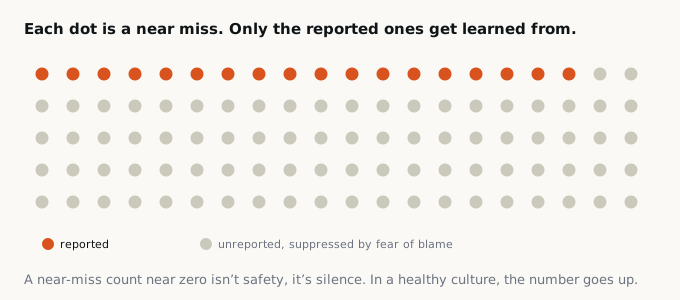
Walk into a site that proudly reports almost no near misses, and the natural read is: this is a safe operation. It is almost always the opposite. A near-miss count near zero doesn’t mean nothing nearly went wrong. It means nobody wrote it down.
The number that lies quietly
Near misses are dramatically under-reported everywhere they’re studied, with the large majority never making it into a formal system. The unreported majority doesn’t vanish; it just stays in people’s heads, which is exactly where it can’t be learned from. An organisation reporting zero is not describing an absence of hazard. It’s describing a silence.
Why the silence? Because reporting has a cost, and the worker pays it. If the culture treats a near-miss report as evidence that someone was careless, a mark against a crew, a source of paperwork, a reason for a “talking-to”, then the rational move is to say nothing. Fear of blame is the single most reliable way to switch off the flow of information a safety program runs on.
What actually turns it back on
The research is unusually consistent here. Psychological safety, the shared belief that you can speak up without being punished for it, is among the strongest predictors of whether people report at all. And just culture, the deliberate shift from blaming individuals to learning from the system, is what converts a punitive environment into one where near misses surface early enough to matter. ISO 45001 leans on the same idea when it requires genuine worker participation and consultation, and NIOSH has repeatedly linked poor risk communication to under-reporting and missed prevention.
Here’s the part that trips up dashboards: in a healthy culture, the near-miss count goes up. Mature operations often log hundreds of near misses per million hours worked, not because they’re more dangerous, but because people finally trust the system enough to feed it. A rising line is the good news. A falling one, absent any change to the work, usually means the reporting culture is quietly dying.
Field check
Two questions cut straight to it. First, ask a frontline worker: what happens to the person who files a near-miss report here? If the honest answer involves scrutiny rather than thanks, your numbers are fiction. Second, look at how leadership treats the trend: is a rising near-miss rate met with "good, we're seeing more" and an investigation, or with pressure to bring the number down? A program that rewards a low count is training its people to stop talking.
You cannot manage what you never hear about. Any near-miss program measured on report volume, without measuring the psychological safety underneath it, is optimising a number that can be driven down by exactly the wrong behaviour: fear.