The rescue plan you never drilled
A permit that names a rescue plan means nothing if no one has practiced it, and "call 911" is usually too slow.
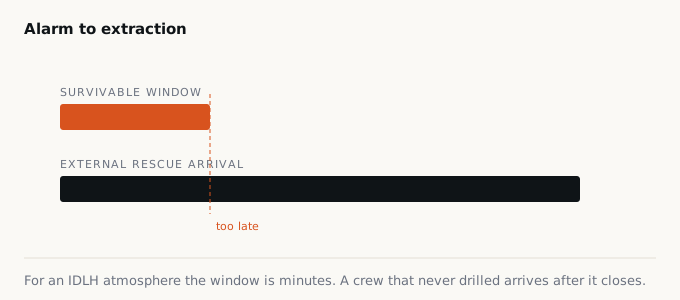
Every confined-space permit has a line for the rescue plan. Filling it in is not the same as being able to execute it. A plan named on a form but never practised is a document; the capability to pull an unconscious worker out of a vessel in minutes is something else, and the gap between the two is measured in lives.
”We’ll call the fire department” is a plan on paper
OSHA’s permit-required confined spaces standard (29 CFR 1910.146) doesn’t just require a rescue arrangement, it requires the employer to evaluate a prospective rescue service’s ability to reach the space and perform the rescue in a timely manner for the specific hazards, and to let that service practise. Reliance on municipal 911 quietly fails on both counts: response times are built for the street, not the vessel, and a crew that has never seen your space is improvising against a clock. For an IDLH atmosphere, the survivable window is minutes. A rescue that arrives in twenty has documented a fatality, not prevented one.
The rescuers are often the second victims
The grim signature of confined-space incidents is multiple fatalities: NIOSH investigations repeatedly find would-be rescuers who rushed in without a plan or air and died beside the person they meant to save. That pattern is the proof that intention and equipment aren’t capability. Drilled retrieval, non-entry systems rigged and used, attendants who have actually practised, is what separates a rescue from a second body.
Field check
Ask: when did your designated rescue team last perform a timed, hands-on retrieval drill in a space representative of your worst confined-space job, and how many minutes from alarm to extraction? If the honest answer is "we'd call the fire department" or "not since onboarding," your rescue plan is a signature, not a safeguard.
A permit proves you thought about rescue. A stopwatch on a real drill proves you can do it. (US standard; confirm your jurisdiction’s requirements.)