Safety Metrics & Recordkeeping
13 pieces, each argued from primary sources and each handing you something you can use on Monday.
-
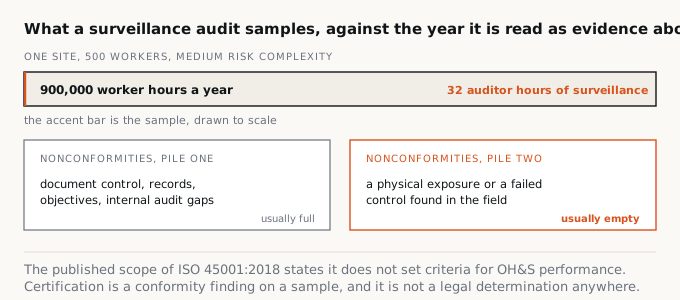 The Skeptic
What the ISO 45001 certificate actually certifies
Sort every nonconformity from your last three-year certification cycle into paperwork versus field exposure. If the field pile is empty, the audit is grading your filing.
-
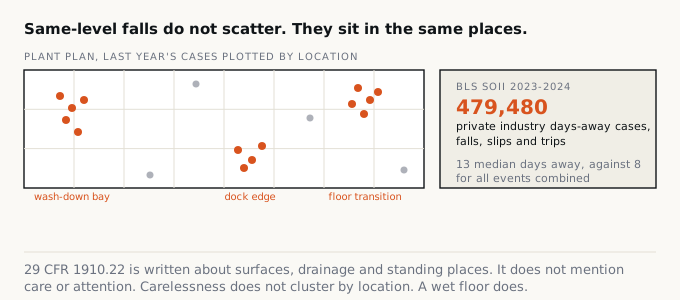 The Floor Walker
Same-Level Falls Are a Design Output, Not a Lapse
Plot last year's same-level fall cases by location, shift and task instead of by person. If they cluster, the cause is a surface, a drain, a light level or a route, because carelessness does not cluster by location.
-
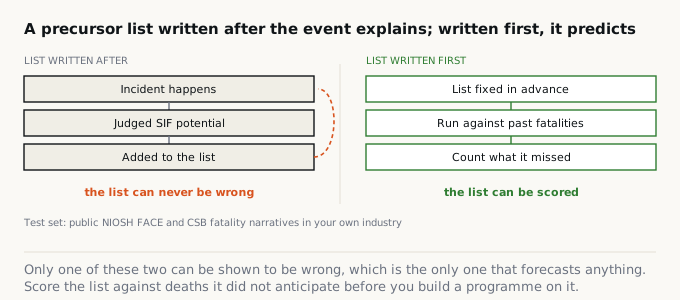 The Skeptic
A SIF Precursor List Only Counts If It Was Written First
A serious injury and fatality precursor programme predicts nothing unless the list was fixed before the incidents it sorts and can be scored against deaths it failed to anticipate.
-
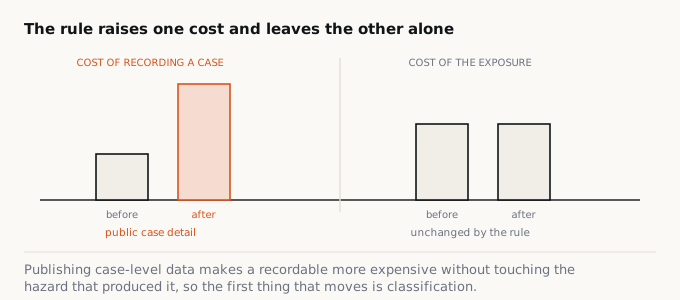 The Skeptic
The Log Is Now a Public Download
Publishing case-level injury data raises the cost of recording a case and leaves the cost of the exposure untouched, so the first thing that moves at most sites will be classification, not hazard control.
-
 The Skeptic
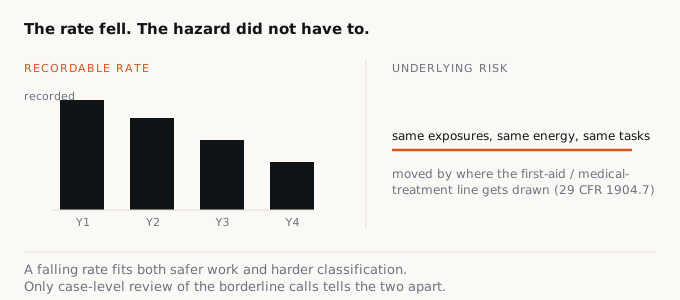
A Falling Recordable Rate Does Not Tell You Which Way It Fell
A dropping recordable rate is equally consistent with safer work and with more aggressive classification. Only case-level review of the decisions, not the total, can tell the two apart.
-
 The Skeptic
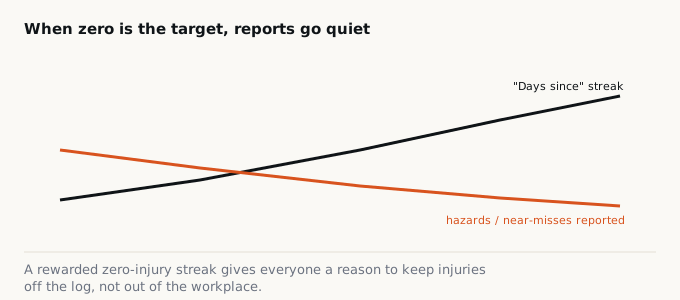
Zero is a vision, not a scoreboard
Attach recognition and pressure to a zero-injury number and you give everyone a reason to keep injuries off the log rather than out of the workplace, so the reported figure can fall while the real risk holds or climbs.
-
 The Skeptic
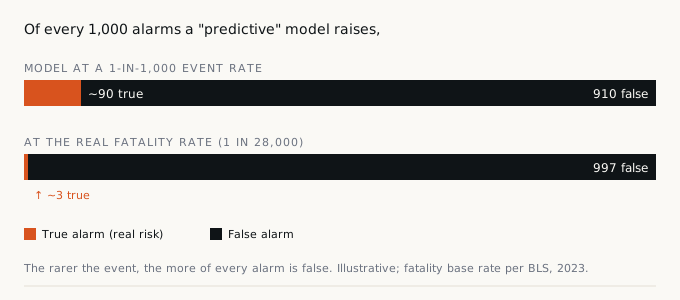
Predictive safety and the base-rate trap
The rarer the incident, the more a 'predictive' model gets wrong every time it fires, and it's trained on the injuries you already have, not the ones that kill.
-
 The Skeptic
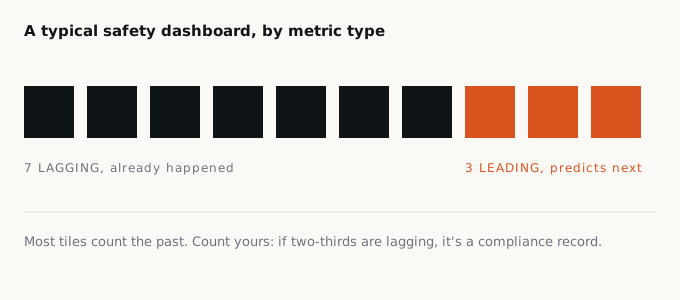
The safety dashboard that only tells you the past
Count the metrics on any safety dashboard. If most describe what already happened, you bought a compliance record, not an early-warning system.
-
 The Skeptic
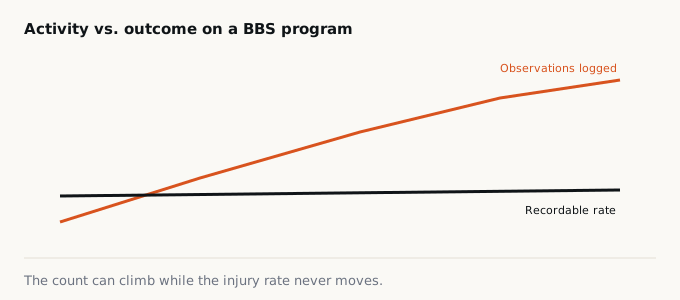
Counting observations isn't reducing incidents
If your BBS KPI is observation volume, you will get observations, not fewer injuries.
-
 The Scout
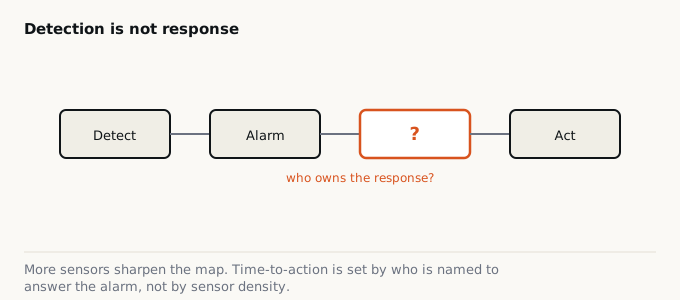
A gas map is only as fast as who answers it
Networked gas sensors can turn point readings into a live area exposure map, but the value is set by alarm routing and who owns the response, not by how many sensors you hang.
-
 The Floor Walker
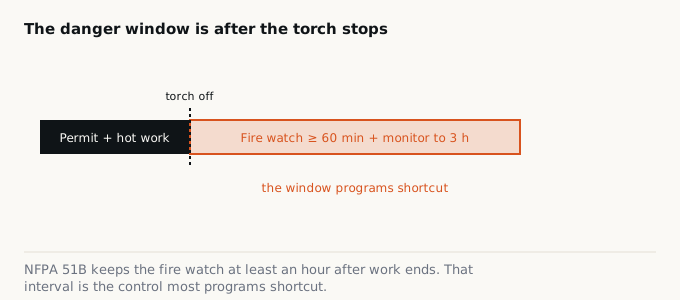
The fire starts after you put the torch down
Many hot-work fires ignite after the cutting stops, during or after the fire watch, so the post-job window is the control that prevents them, and it is the one most programs shortcut.
-
 The Skeptic
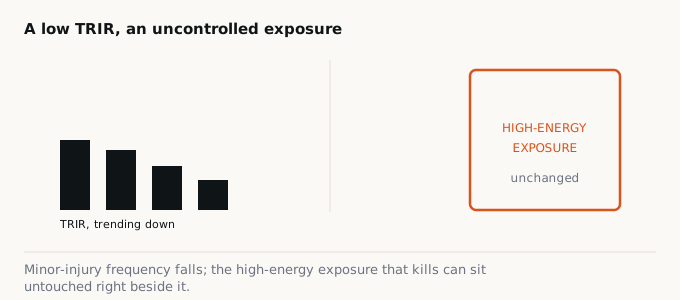
A low TRIR isn't a safe site. It's a small number.
Because the recordable rate is a low-count figure shaped by case management and the first-aid line, a falling TRIR can sit right alongside rising fatality exposure, so benchmarking budget to an industry average can steer money away from what kills people.
-
 The Skeptic
Rate-based safety bonuses buy silence, not safety
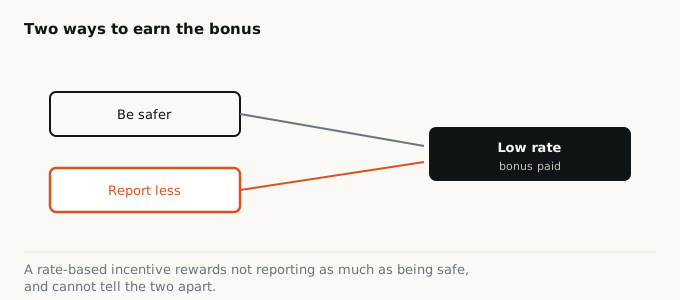
If your incentive pays out for a low recordable rate, you are rewarding non-reporting alongside actual safety, and OSHA has formally warned that such programs can unlawfully discourage reporting.