AI in Safety
6 pieces, each argued from primary sources and each handing you something you can use on Monday.
-
 The Scout
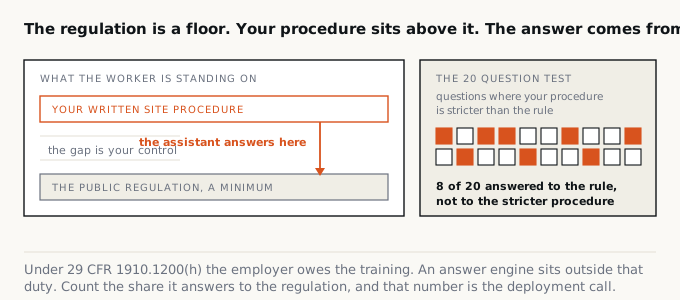
When the assistant answers to the regulation, not your procedure
Put 20 questions to your site assistant where your own written procedure is stricter than the rule. The share it answers to the regulation is your deployment decision.
-
 The Scout
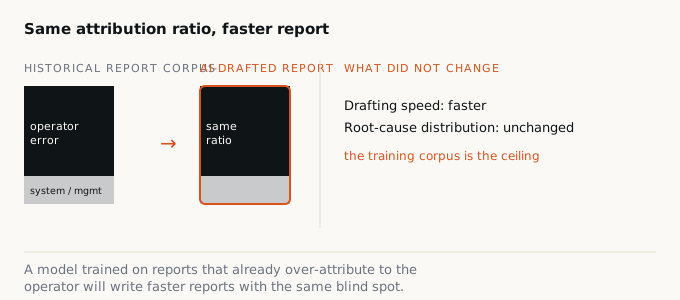
The AI That Writes Your Incident Report Learned Root Cause From the Reports Before It
AI tools that draft post-incident investigation reports are pattern-matched against a corpus of past reports that already over-attributes causation to operator error, so faster drafting will scale that bias, not correct it.
-
 The Scout
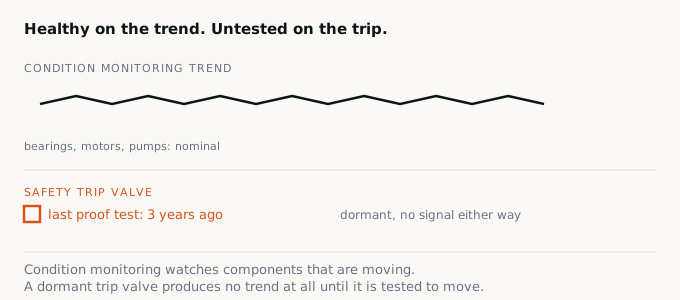
Predictive maintenance is optimising for uptime. Your safety layer is not.
Condition monitoring finds degradation that announces itself. A proof test finds dangerous failures that do not, which is why PdM coverage cannot be traded for a longer proof test interval without changing the PFD you certified.
-
 The Scout
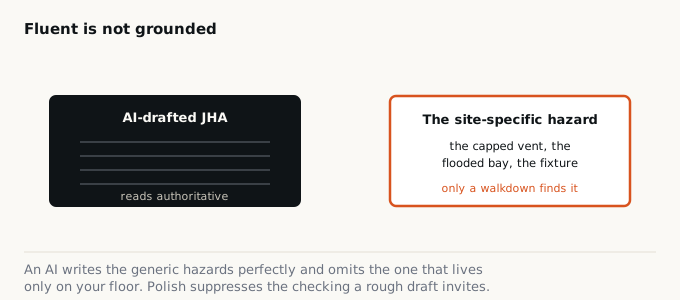
An AI can draft your JHA. It cannot do it.
A language model writes a job hazard analysis from generic patterns, not from your floor, so it will omit the site-specific hazard a walkdown would catch and dress the omission in confident, standard-sounding prose.
-
 The Skeptic
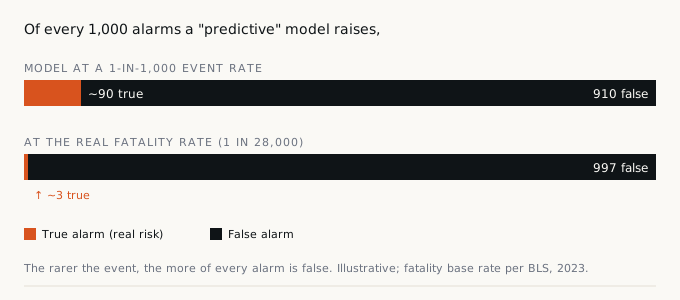
Predictive safety and the base-rate trap
The rarer the incident, the more a 'predictive' model gets wrong every time it fires, and it's trained on the injuries you already have, not the ones that kill.
-
 The Scout
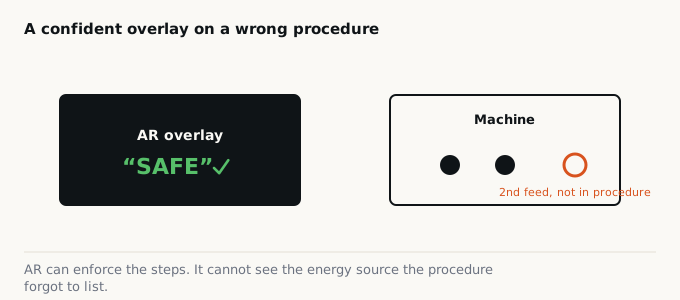
An AR overlay is only as honest as the procedure behind it
Augmented reality can enforce a correct isolation sequence and cut skipped steps, but an AR overlay built on an outdated energy-control procedure is more dangerous than paper because it turns a wrong instruction into a confident one.