Gas Detection
5 pieces, each argued from primary sources and each handing you something you can use on Monday.
-
 The Scout
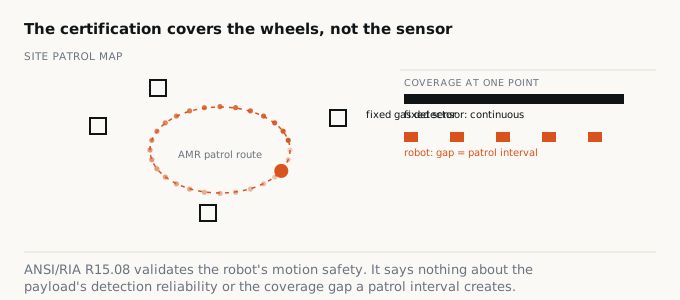
Robots Can Now Sniff for Leaks. Nobody Has Certified How Well.
Autonomous mobile robots are increasingly built to carry gas sensors and thermal cameras on patrol routes, but the standard that certifies the robot's movement says nothing about the payload's detection reliability, and almost no site is yet asking what the patrol interval actually costs in coverage.
-
 The Scout
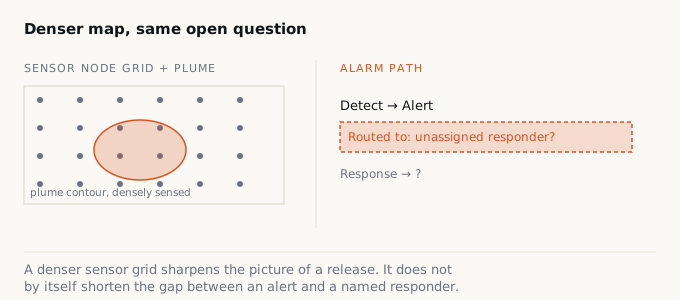
The Gas Map Gets Sharper. Does the Response Get Faster?
Denser fixed gas-sensor networks sharpen the spatial picture of a release, but that picture only cuts time-to-safe-response if alarm routing and response ownership improve with it, otherwise a denser map is just a better record of what already went wrong.
-
 The Scout
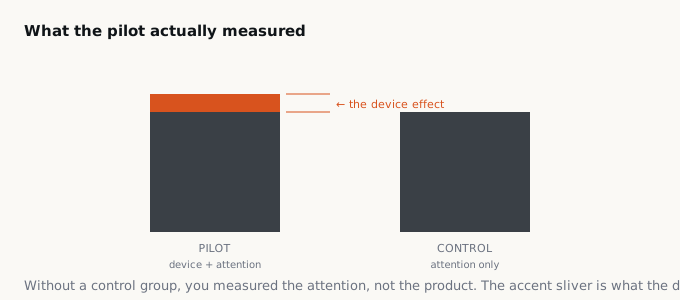
Wearables promised fewer slips. What the evidence actually shows.
A 12-week pilot can't tell you whether a sensor works, because the attention around the pilot moves the numbers as much as the device does.
-
 The Skeptic
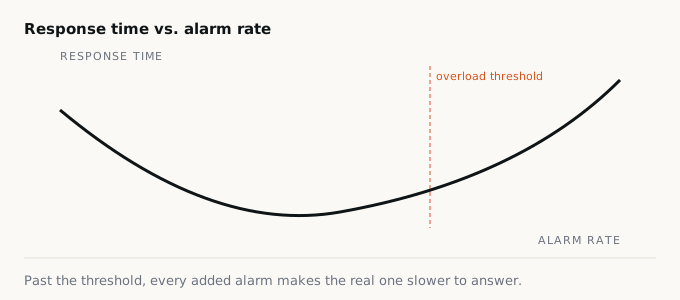
More alarms, slower response
Past a threshold, adding alerts raises response latency instead of lowering it.
-
 The Skeptic
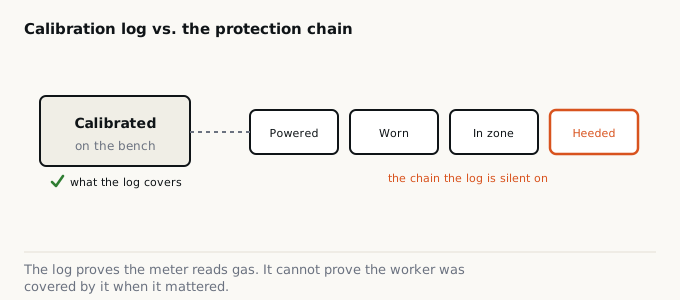
Your calibration log proves the meter works, not the worker
A bump-test or calibration record verifies device integrity; it says nothing about whether the monitor was worn, powered, in the breathing zone, and heeded.