Fall Protection & Work at Height
6 pieces, each argued from primary sources and each handing you something you can use on Monday.
-
 The Skeptic
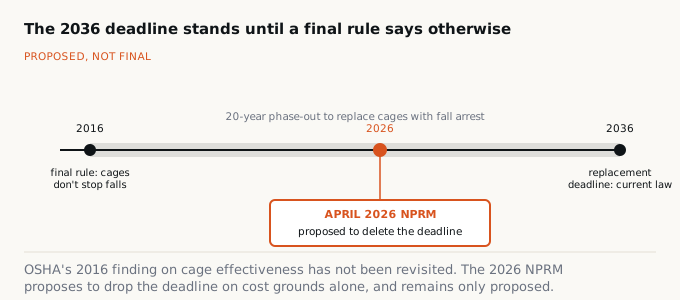
The 2036 Ladder Deadline Isn't Gone. It's Only Proposed to Die.
OSHA's own 2016 record found that cages and wells on fixed ladders do not stop a fall. In 2026 the agency proposed to let that acknowledged-inadequate protection stand indefinitely, without revisiting the safety finding, only the cost. As of this writing the 2036 replacement deadline is still current federal law.
-
 The Floor Walker
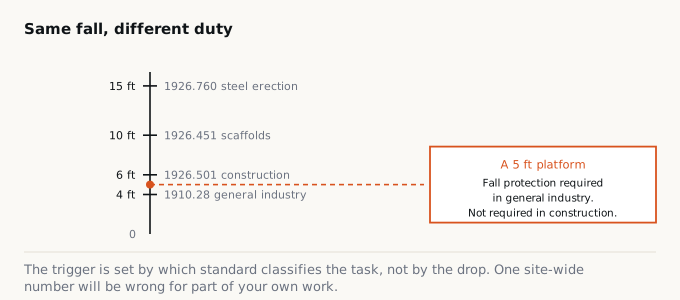
The Trigger Height Is a Classification, Not a Measurement
In United States workplaces the height at which fall protection becomes mandatory is set by which OSHA standard classifies the task, so any program that publishes one site-wide trigger height is wrong for part of its own work.
-
 The Floor Walker
The green tag was true when it was hung
A scaffold tag records one competent person's judgment at handover. OSHA requires an inspection before each work shift, because the hazard is what three trades did to the scaffold since.
-
 The Floor Walker
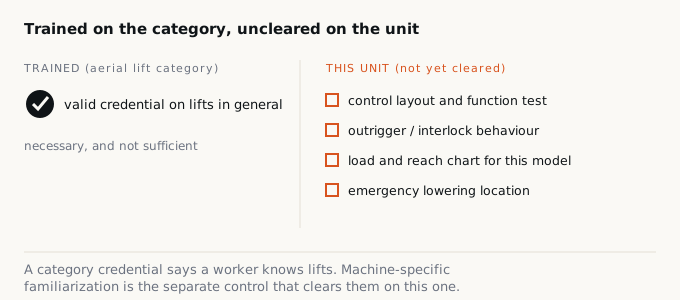
The Card Says Certified. The Machine Says Otherwise.
An operator certified on aerial lifts can still be untrained on the specific unit in front of them. Familiarization on that unit, not the wallet card, is the control that closes the gap.
-
 The Floor Walker
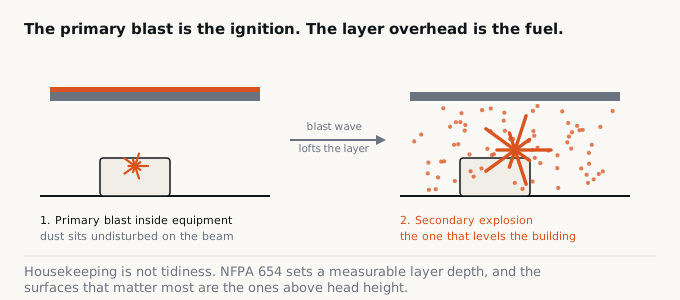
The explosion that kills is the second one
The primary blast is rarely what kills. It lofts the dust that has settled on beams and ledges overhead, and that secondary explosion is the one that levels the building.
-
 The Floor Walker
Ladder-last: the fall usually started with the wrong access
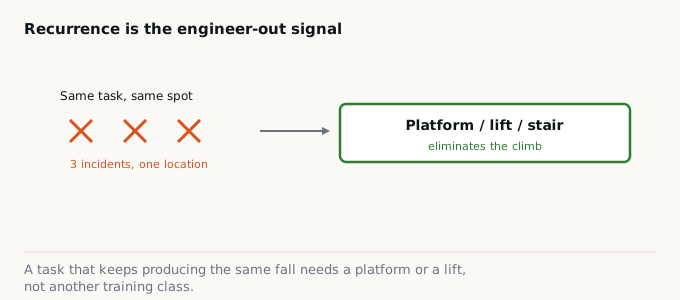
Most ladder injuries are not a training problem; they are a task that should never have been done from a ladder, so the durable fix is removing the ladder, not retraining the user.