Drones & Robotics
5 pieces, each argued from primary sources and each handing you something you can use on Monday.
-
 The Scout
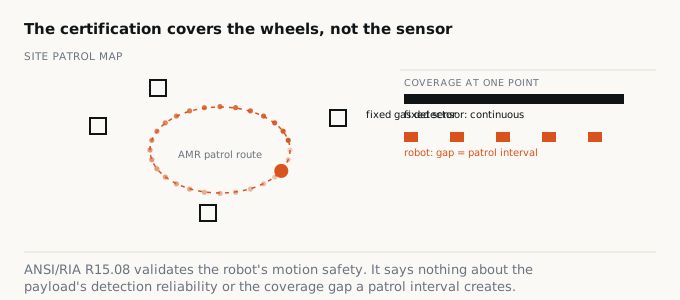
Robots Can Now Sniff for Leaks. Nobody Has Certified How Well.
Autonomous mobile robots are increasingly built to carry gas sensors and thermal cameras on patrol routes, but the standard that certifies the robot's movement says nothing about the payload's detection reliability, and almost no site is yet asking what the patrol interval actually costs in coverage.
-
 The Scout
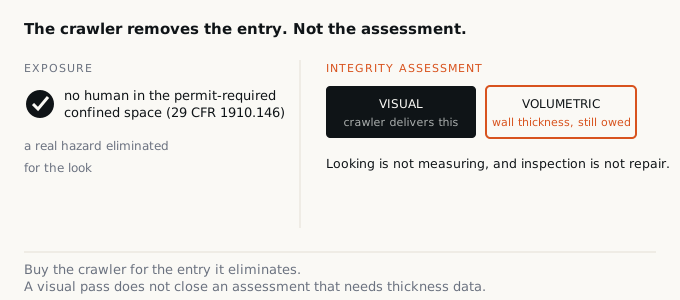
The Crawler Goes In So Nobody Has To. That Solves One Problem, Not Two.
A robotic inspection crawler removes the human entry hazard from a tank or vessel, but it does not, by itself, satisfy an integrity assessment that requires quantitative wall-thickness data. Buy it for the exposure it eliminates, not for the assessment it cannot finish.
-
 The Scout
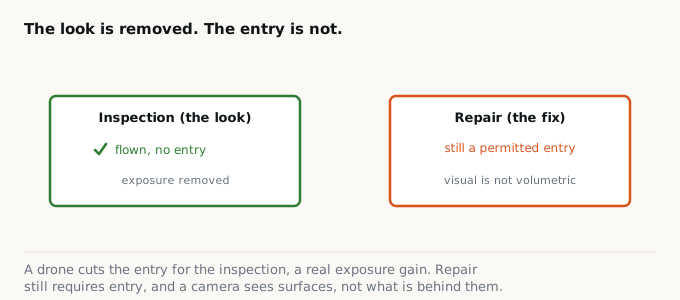
The drone saw the tank. It did not enter it.
Inspection drones genuinely cut hazardous entries and work at height for the look, but a camera sees surfaces, not what is behind them, and it never removes the entry that repair still requires.
-
 The Scout
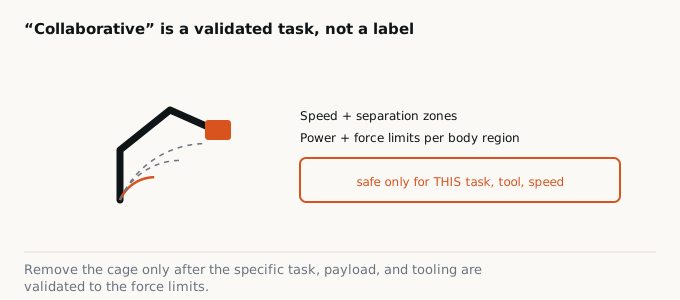
Collaborative removes the cage, not the hazard
A cobot is safe only when its speed-and-separation monitoring or power-and-force limits are validated for the specific task, payload, and tooling in front of it, not because the machine is sold under the label collaborative.
-
 The Scout
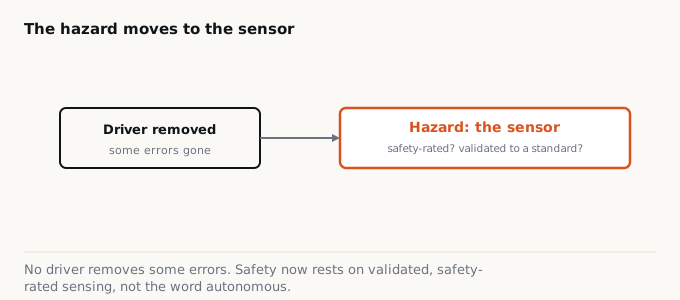
Nobody is driving, which is the point and the problem
Removing the human driver from a warehouse vehicle removes some errors and introduces new ones, so safety around AMRs now rests on validated, safety-rated sensing and the standard the vehicle was commissioned to, not on the word autonomous.