Connected Worker Technology
7 pieces, each argued from primary sources and each handing you something you can use on Monday.
-
 The Scout
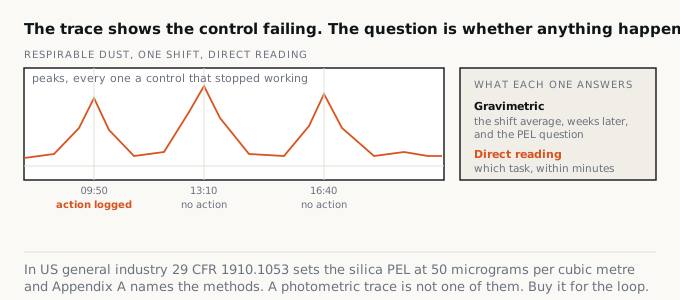
Direct-reading dust monitors are a control loop, not a sample
Pull a month of real-time dust traces and match every peak to an action taken. If the peaks generated charts and no work changed, you bought a recorder.
-
 The Scout
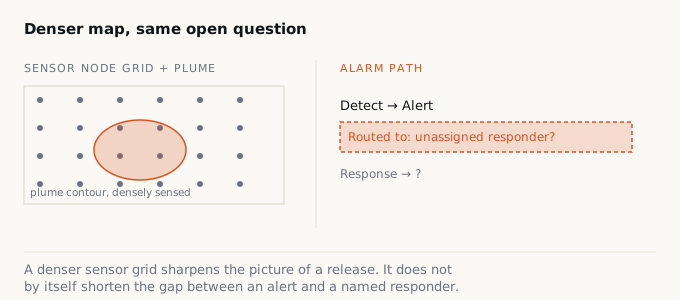
The Gas Map Gets Sharper. Does the Response Get Faster?
Denser fixed gas-sensor networks sharpen the spatial picture of a release, but that picture only cuts time-to-safe-response if alarm routing and response ownership improve with it, otherwise a denser map is just a better record of what already went wrong.
-
 The Scout
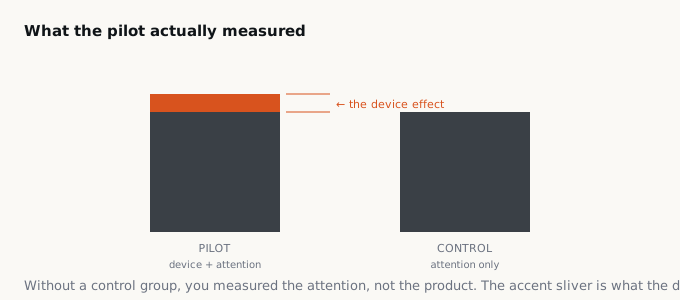
Wearables promised fewer slips. What the evidence actually shows.
A 12-week pilot can't tell you whether a sensor works, because the attention around the pilot moves the numbers as much as the device does.
-
 The Skeptic
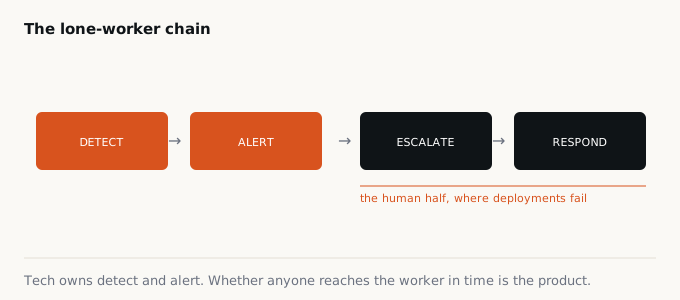
A lone-worker app is only as good as who answers
The check-in isn't the safeguard, the escalation behind it is. The real metric is measured time-to-rescue.
-
 The Skeptic
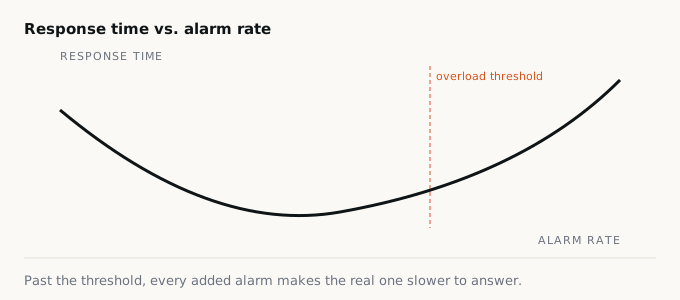
More alarms, slower response
Past a threshold, adding alerts raises response latency instead of lowering it.
-
 The Scout
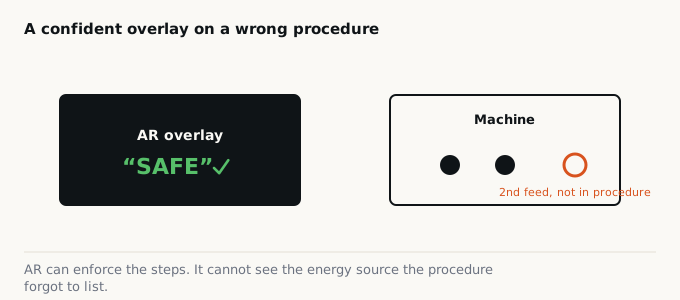
An AR overlay is only as honest as the procedure behind it
Augmented reality can enforce a correct isolation sequence and cut skipped steps, but an AR overlay built on an outdated energy-control procedure is more dangerous than paper because it turns a wrong instruction into a confident one.
-
 The Scout
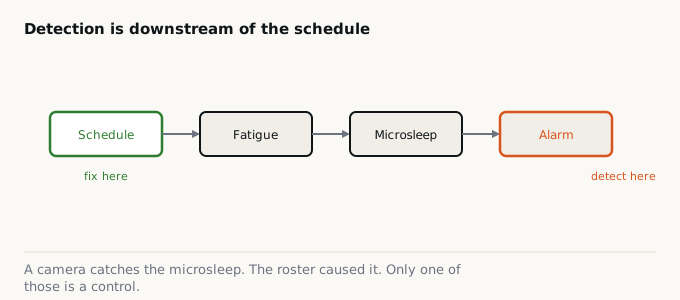
Watching the eyelids instead of fixing the roster
Fatigue-detection wearables and in-cab cameras catch the microsleep, but fatigue is a scheduling problem, so detection without a roster change just surveils the symptom and moves the blame onto the tired worker.